How to Do Istikhara for Marriage: A Step-by-Step Guide
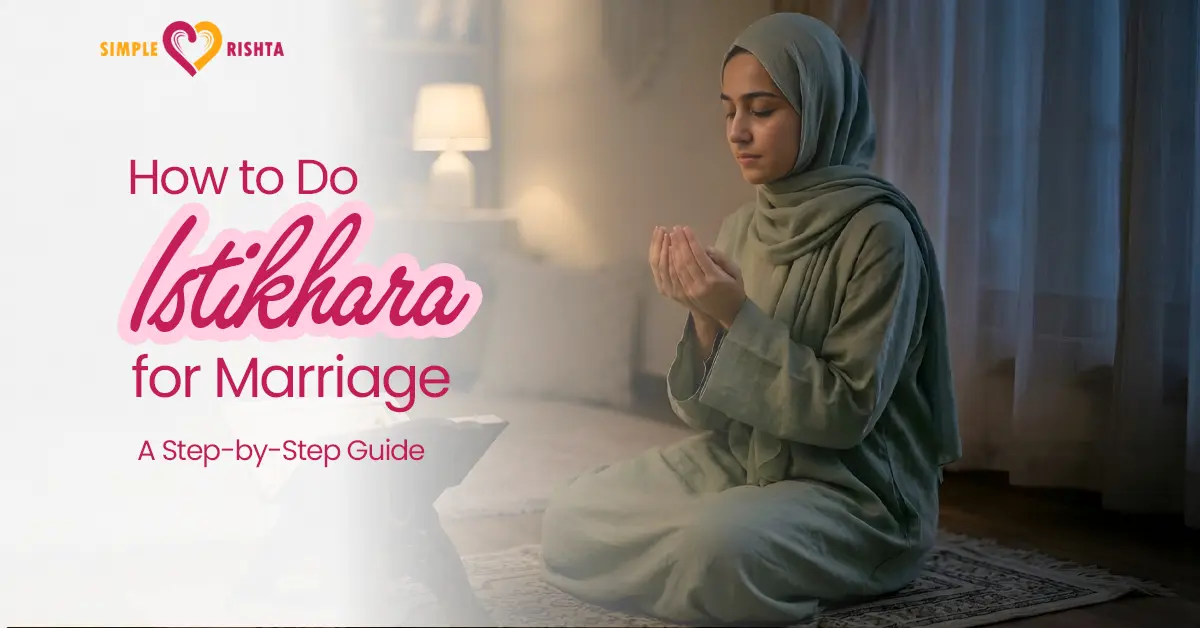
Choosing a life partner is not a small decision. It is one of the biggest choices you will ever make. Because it is not just about finding someone you like; it is about choosing a companion for your future, someone who may stand by you through happiness, struggles, growth, and change. That is exactly why this decision can feel so heavy.
Sometimes a proposal looks perfect on paper. The family agrees, the person seems right, and everything appears smooth. But deep inside, there can still be confusion or hesitation. This is where Istikhara is important.
When your heart feels uncertain and your mind keeps questioning, turning to Allah for guidance brings comfort. If you have ever felt stuck between “this seems right” and “something doesn’t feel right,” you are not alone. That’s why learning how to do Istikhara for marriage becomes important. It can help bring clarity and peace to your heart.
What Is Istikhara?
The word istikhara literally means “to seek goodness.” It is Sunnah. The Prophet Muhammad PBUH, taught his companions to perform it for every significant decision.
Indeed, istikhara is a special prayer where you ask Allah to guide you toward what is best for you. Not just what you want, but what’s truly good for your dunya and akhirah.
A study by the Pew Research Center (2020) found that nearly 62% of young Muslims feel anxious about choosing the right spouse. You’re not alone. That anxiety is exactly why the Prophet PBUH taught us this prayer.
Why Do People Perform Istikhara for Marriage?
People don’t just do Istikhara because they’re confused. Sometimes everything looks perfect on paper, but the heart still needs reassurance.
A 2023 survey by the Islamic Society of North America found that 78% of Muslim youth turn to Istikhara before major life decisions, with marriage ranking at the top. That’s not superstition; that’s trusting in divine guidance.
In fact, the importance of marriage in Islam goes far beyond just finding a companion. It is considered half of one’s deen. Given that weight, seeking Allah’s guidance before committing makes complete sense.
People perform Istikhara because:
| Reason For Istikhara | Why It Matters |
| They want clarity | Emotions can affect judgment |
| They fear making the wrong choice | Marriage impacts long-term life decisions |
| They seek peace in their heart | Inner reassurance brings confidence |
| They trust Allah’s knowledge | Allah knows what is hidden and unseen |
| They want blessings in their decision | A good beginning matters in marriage |
How to Do Istikhara for Marriage: Step-by-Step
Here’s the full process of istikhara for marriage:
1. Make a Clear Intention
Before starting, know exactly what you are seeking guidance for.
2. Make Wudu (Ablution)
Start clean. Perform proper wudu, just as you would for any salah.
3. Pray Two Rak’ahs Nafl
Pray two rak’ahs with the intention of Istikhara in your heart. After Surah Al-Fatiha, you can recite any Surah you know. Commonly, people recite Surah Al-Kafirun in the first rak’ah and Surah Al-Ikhlas in the second, but this is recommended, not compulsory.
This is a voluntary (nafl) prayer, not like Fajr or Maghrib. You can perform it at any time except for the forbidden times — after Fajr until sunrise, and after Asr until sunset.
The best time is often the last third of the night, when everything is quiet and the heart feels more focused. However, if that’s not possible, any sincere and calm moment is completely fine.
4. Recite the Istikhara Dua
After completing the salah and before ending with salaam, or immediately after, recite the authentic dua:
“Allahumma inni astakhiruka bi ilmika, wa astaqdiruka bi qudratika, wa as’aluka min fadlikal azeem. Fa innaka taqdiru wa la aqdir, wa ta’lamu wa la a’lam, wa anta allaamul ghuyoob…”
اللَّهُمَّ إِنِّي أَسْتَخِيرُكَ بِعِلْمَكَ، وَأَسْتَقْدِرُكَ بِقُدْرَتِكَ، وَأَسْأَلُكَ مِنْ فَضْلِكَ الْعَظِيمِ، فَإِنَّكَ تَقْدِرُ وَلَا أَقْدِرُ، وَتَعْلَمُ، وَلَا أَعْلَمُ، وَأَنْتَ عَلَّامُ الْغُيُوب۔۔۔
O Allah, I seek the counsel of Your Knowledge, and I seek the help of Your Omnipotence, and I beseech You for Your Magnificent Grace. Surely, You are Capable and I am not. You know and I know not, and You are the Knower of the unseen…
You can say it in Arabic, or in your own language if you don’t know Arabic. The full dua asks Allah to make the matter easy if it is good for your deen, worldly life, and hereafter, and to distance you from it if it isn’t.
5. Mention the Matter in Your Heart
When you reach the part of the dua that says, “this matter,” gently bring the specific decision into your heart and mind, especially the person you are considering marriage.
You don’t need to say the name out loud. Just think about them clearly while making the dua. A common mistake people make is staying too general, like saying “this marriage” without clarity. Instead, be specific to your intention. Focus on the particular person you are asking for guidance.
6. Trust Allah and Move Forward
After performing Istikhara, try not to overthink or obsess about the outcome. Go on with your normal life and observe how things naturally unfold.
Do you feel calm and at ease about the decision? Or does the situation start to feel more complicated and difficult?
This is where many people misunderstand Istikhara. It is not about waiting for a dream or a clear sign overnight. Instead, guidance often comes through ease or difficulty in the path ahead.
If things start to become smoother, doors open naturally, and your heart feels peaceful, it may be a positive direction for you. But if you face continuous obstacles, confusion, or a feeling of discomfort, that can also be a form of guidance.
The key is patience. Trust Allah’s plan and allow clarity to come in its own time.
What are the Signs of Istikhara Specific to Marriage Decisions?
Istikhara signs for marriage are not usually about dreams or supernatural experiences. Instead, they are understood through how things unfold in real life and how your heart feels about the decision.
In most cases, positive signs include ease in the process of marriage, things moving forward smoothly, family agreement happening without major issues, and a growing sense of peace and comfort when you think about the person.
On the other hand, negative signs may appear as repeated obstacles, increasing confusion or discomfort without a clear reason, or new concerns about the person or situation coming to light.
The most important thing is to look at these signs along with practical thinking and family consultation. Istikhara is not meant to replace your judgment, but to guide and support it with inner clarity and ease.
The real signs of istikhara are more subtle:
| Sign Type | What It Looks Like |
| Ease of heart | The situation feels settled, not forced |
| Practical doors opening | Things move forward with minimal friction |
| Unease or doubt | A persistent unsettled feeling, even without reason |
| Circumstances closing | Obstacles arise unexpectedly and consistently |
| Dream (if it comes) | A clear positive or negative sense — not mandatory |
Think of it this way: istikhara shifts your tawakkul (reliance) to Allah. The outcome often reveals itself through real-world events and your own gut feeling after sincere prayer.
How Many Times Should You Perform Istikhara?
Scholars differ slightly on this. Most agree that one sincere istikhara is sufficient. However, if you don’t feel clarity after a few days, you can repeat it up to seven times. Though this isn’t obligatory. What matters most is sincerity, not repetition.
What is the Best Time for Istikhara?
There is no fixed or strict time for Istikhara. You can pray for it anytime, as long as it is not during the forbidden prayer times, like after Fajr until sunrise, at exactly midday, or after Asr until sunset.
However, many scholars suggest the best time is after Tahajjud, in the last third of the night, or after any obligatory prayer when your heart feels calm and focused. At night, everything is quiet, the mind is less distracted, and it becomes easier to connect with Allah.
That said, Istikhara is not about timing alone. The most important thing is your sincerity and presence of the heart. Whether it is day or night, what truly matters is that you pray with a clear intention and a peaceful mind.
Common Misconceptions About Istikhara vs. Reality
| Misconception | What Scholars Actually Say |
| “I must see a dream” | Dreams are not required — clarity through events is equally valid |
| “I should feel extreme peace immediately” | The response can be gradual over days |
| “Someone else can do it for me” | You should ideally perform it yourself; however, a scholar can do it on your behalf with conditions |
| “Do it once and decide right away” | Take time to observe signs — don’t rush a conclusion |
| “Green/white means yes, black means no” | This is cultural folklore, not from authentic hadith |
Conclusion
Learning how to do istikhara for marriage is not difficult. What really makes it challenging is patience. We often want quick answers, clear signs, and instant certainty, especially when it comes to something as important as marriage. But Istikhara is not about rushing to decide. It is about learning to trust and surrender. Actually, istikhara teaches us to place our confusion in the hands of Allah and believes that He knows what we cannot see.
Marriage is one of the most serious decisions in life, so it deserves time, reflection, and sincere prayer. Ask questions, think carefully, and most importantly, trust Allah’s plan. Sometimes the answer you receive may not match what you originally hoped for, but it is often the one that is truly best for you. And with time, you begin to understand that divine guidance always leads you where you are meant to be.
Frequently Asked Questions
Can someone else perform istikhara on my behalf?
Ideally, you should perform istikhara yourself since it is your decision and your heart’s response is part of the guidance. However, many scholars permit asking a pious person, like a scholar or righteous elder, to perform istikhara on your behalf, especially if you are genuinely unable to perform salah. In that case, the results are still observed through your own feelings and circumstances.
Is online Istikhara for marriage valid or reliable?
The safest and most authentic way is to perform Istikhara yourself, as taught in Islam, and if needed, seek guidance from a trusted local scholar instead of relying on anonymous online services.
This is because Istikhara is meant to be a personal act of worship where you directly ask Allah for guidance through prayer and dua. Traditionally, it is not meant to be done through third-party online platforms.
Some scholars do allow it in limited cases if a qualified and trustworthy scholar is sincerely making dua on your behalf. However, many discourage relying on online services due to concerns about transparency, authenticity, and accountability.
Online Istikhara may only be considered acceptable when it is:
- Done by a verified and knowledgeable scholar (imam or mufti)
- Based purely on sincere dua and guidance, not predictions or “guaranteed results”
- Free from claims of dreams, magic, or fixed “yes/no” answers
On the other hand, it becomes unreliable when it is:
- Fully automated or app-based with instant results
- Promising guaranteed outcomes or future predictions
- Involving payment for spiritual results or questionable practices
What is the istikhara dua for marriage, with Urdu translation?
اللَّهُمَّ إِنِّي أَسْتَخِيرُكَ بِعِلْمَكَ، وَأَسْتَقْدِرُكَ بِقُدْرَتِكَ، وَأَسْأَلُكَ مِنْ فَضْلِكَ الْعَظِيمِ، فَإِنَّكَ تَقْدِرُ وَلَا أَقْدِرُ، وَتَعْلَمُ، وَلَا أَعْلَمُ، وَأَنْتَ عَلَّامُ الْغُيُوبِ، اللَّهُمَّ إِنْ كُنْتَ تَعْلَمُ أَنَّ هَذَا الْأَمْرَ- خَيْرٌ لِي فِي دِينِي وَمَعَاشِي وَعَاقِبَةِ أَمْرِي- عَاجِلِهِ وَآجِلِهِ- فَاقْدُرْهُ لِي وَيَسِّرْهُ لِي ثُمَّ بَارِكْ لِي فِيهِ، وَإِنْ كُنْتَ تَعْلَمُ أَنَّ هَذَا الْأَمْرَ شَرٌّ لِي فِي دِينِي وَمَعَاشِي وَعَاقِبَةِ أَمْرِي- عَاجِلِهِ وَآجِلِهِ- فَاصْرِفْهُ عَنِّي وَاصْرِفْنِي عَنْهُ وَاقْدُرْ لِيَ الْخَيْرَ حَيْثُ كَانَ ثُمَّ أَرْضِنِي بِهِ
اے اللہ! بے شک میں تجھ سے تیرے علم کے ساتھ بھلائی طلب کرتا ہوں اور تجھ سے تیری قدرت کے ساتھ طاقت طلب کرتا ہوں اور میں تجھ سے تیرے فضل عظیم کا سوال کرتا ہوں کیونکہ تو قدرت رکھتا ہے اور میں قدرت نہیں رکھتا ، تو جانتا ہے اور میں نہہیں جانتا اور تو غیبوں کو خوب جانتا ہے۔ اے اللہ اگر تو جانتا ہے کہ بے شک یہ کا م (اس کام کا نام لے) میرے لئے میرے دین ، میرے معاش اور میرے انجا م کار کے لحاظ سے بہتر ہے تو اس کا میرے حق میں فیصلہ کر دے اور اسے میرے لئے آسان کر دے ، پھر میرے لئے اس میں برکت ڈال دے اور اگر تو جانتا ہے کہ بے شک یہ کام (اس کام کا نام لے) میرے لئے میرے دین، میرے معاش اور میرے انجام کارکے لحاظ سے برا ہے تو اسے مجھ سے دور کر دے اور مجھے اس سے دور کر دے اور میرے لئے بھلائی کا فیصلہ کر دے جہاں بھی وہ ہو ، پھر مجھے اس پر راضی کر دے ۔
Do I have to pray Istikhara multiple times?
No, you don’t have to. One sincere Istikhara is enough. However, if you still feel very confused or unable to decide, you can repeat it for peace of mind.
How do I know if Istikhara worked?
Istikhara is not about dreaming or seeing a clear sign overnight. Instead, it is reflected in how things gradually unfold after the prayer. You may feel a sense of ease and clarity in your heart, or notice that the situation becomes smoother and progresses naturally. On the other hand, if repeated obstacles appear, confusion increases, or things consistently feel difficult, it may be a sign to reconsider the decision.
Can I repeat Istikhara if I am unsure?
Yes, you can repeat Istikhara if you still feel confused or unable to decide. It is allowed, especially when your heart is not yet settled and you need more clarity before making a final decision.
The purpose of repeating Istikhara is not to force a specific outcome or wait for a dream, but to seek peace of mind and clarity from Allah. It helps you feel more confident about the direction you should take.
Once you start feeling clear, at ease, or naturally guided toward or away from the decision, you should trust that feeling and move forward with it, relying on Allah’s guidance.
What are the common purposes of Istikhara?
Istikhara is done when you need help from Allah in making a decision. People usually do it for marriage decisions, like choosing a proposal or partner. It is also used for career choices, education, job changes, or starting a business. Many also perform Istikhara before travel, moving to a new place, or making big financial decisions like buying a house or signing a contract.
In simple words, Istikhara can be done for any important decision—big or small—when you are unsure and want Allah’s guidance.