Joint Family System in Islam: Facts, Challenges, and Solutions
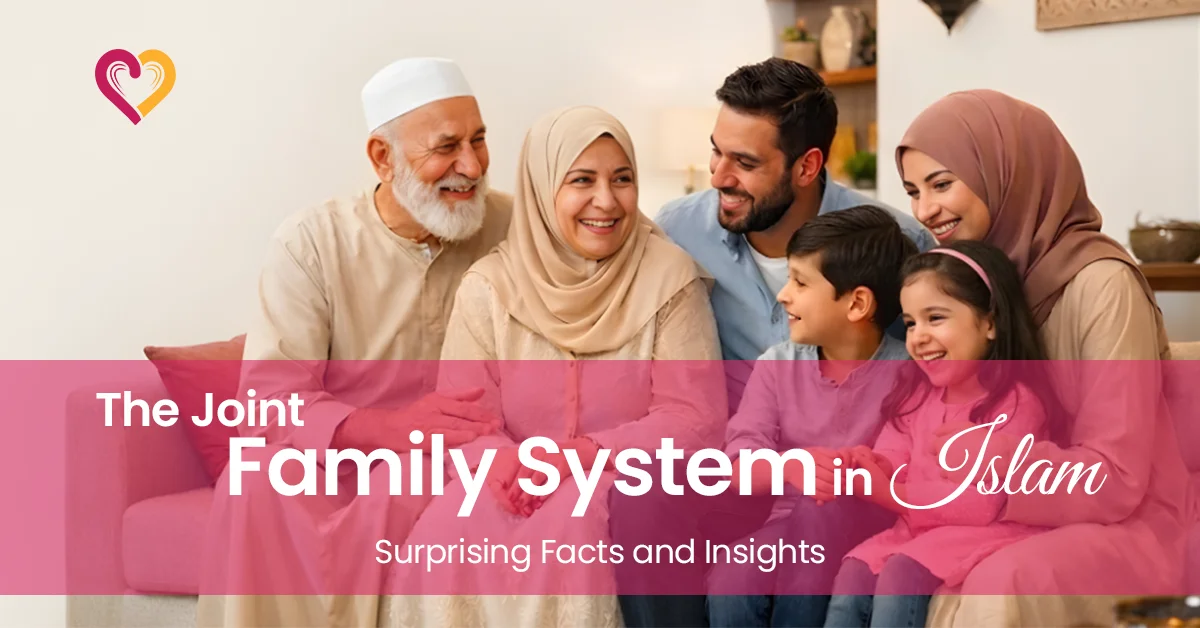
Family holds a very special place in Islam. It is not just a group of people living together; it is a system of support, love, and responsibility. In many Muslim societies, especially in South Asia and the Middle East, the joint family system is a common way of living.
Parents, married sons, daughters-in-law, and children often live under one roof. The joint family system in Islam is often discussed when people talk about family values and social structures in Muslim societies.
Research from the Islamic Society of North America (ISNA) highlights that Muslim families who maintain close family ties report stronger faith, better financial stability, and lower divorce rates.
However, modern lifestyles have changed family structures. Many couples today prefer a nuclear family, while others still value the joint setup and the strong family bonds it offers.
However, many people still ask an important question: Is the joint family system encouraged in Islam, or is it just a cultural tradition?
Some families believe living together strengthens relationships, while others think it creates unnecessary conflicts. Understanding the Islamic perspective can help families make better decisions.
Joint Family System in Islam: What Does Islam Say?
Islam strongly encourages kindness toward parents and relatives. Allah says in the Quran, “Worship Allah and associate nothing with Him, and to parents do good, and to relatives…”
(Surah An-Nisa, 4:36)
This verse clearly shows that Islam places great value on family connections. Furthermore, there is a Hadith of Prophet Muhammad (PBUH):
“Whoever wishes to have his provision expanded and his life prolonged should maintain his family ties.”
(Bukhari & Muslim)
This Hadith clearly shows the importance of strong family relationships in Islam. It teaches that when people stay connected with their relatives, help them, visit them, and support them, Allah places blessings (Barakah) in their lives. These blessings may appear to be a better livelihood, peace in life, and a longer or more meaningful life.
Is the Joint Family System Allowed in Islam?
So, Islam does not force anyone to live in a joint family. However, it strongly encourages maintaining strong family ties, respect for elders, and care for relatives. Therefore, the joint family system in Islam is naturally supported by Islamic values when it is based on respect, fairness, and love.
Islam gives every wife the right to have her own home and private space. This right is called Sakan (سكن), which means a safe and peaceful place to live. A husband should provide this for his wife.
However, if the wife willingly agrees to live in a joint family and no one forces her, then it is completely acceptable in Islam. Many families choose this arrangement because it helps them stay close and support each other. Mutual respect in a marriage requires that a couple build their relationship and home on love and mutual agreement, whether they live in a joint family or a nuclear family.
Facts about Joint Family Living
A 2018 study published in the Journal of Marriage and Family found that children raised in extended family households showed better emotional stability and academic performance. But there are also some surprising facts about joint family living that you may or may not know. Let’s check them out.
1. Islam Does Not Obligate a Joint Family System
Many people assume Islam requires a bride to live with her husband’s parents. Islamic teachings do not make joint family living compulsory. A wife has the right to request separate accommodation where she can live with privacy and dignity.
2. A Wife Is Not Religiously Responsible for In-Laws
Culturally, daughters-in-law are often expected to serve the entire household. However, Islamic scholars explain that a wife’s primary responsibility is toward her husband and children, not toward the extended family.
3. A Wife Has the Right to Separate Accommodation
One surprising Islamic ruling is that a wife can ask for her own separate living space where she has privacy and comfort.
4. Respect for Parents Remains Mandatory
Even if a couple lives separately, Islam strongly emphasizes kindness, respect, and care for parents. Separation in residence does not mean separation in responsibility.
5. Privacy Is an Important Islamic Principle
Islam values personal privacy. The Qur’an even emphasizes seeking permission before entering private spaces, which supports the idea that couples deserve their own space and boundaries.
Challenges and Solutions in the Joint Family System
According to a 2020 survey by the Pew Research Center, about 64% of Muslims in South Asia and the Middle East live in extended family settings and report higher levels of satisfaction with family life.
Living in a combined family can be rewarding, but it also comes with its own set of challenges. Families must focus on respect, fairness, and open communication, because these helpful factors to live in a joint family system can strengthen relationships and create a supportive home environment. Here are some common issues and ways to address them:
1. Privacy Issues
Challenge:
In many joint families, couples may struggle with a lack of personal space. This can create stress and misunderstandings, especially when toxic family members interfere in the couple’s private matters.
Solution:
Islam values privacy and mutual respect. Families can create separate living spaces within the same house or set clear boundaries so the couple can maintain their personal life.
2. Role Expectations from the Daughter-in-Law
Challenge:
In some cultures, the daughter-in-law is expected to manage household responsibilities for the entire family, which can lead to pressure and resentment.
Solution:
Islam encourages fairness and kindness in family relationships. Responsibilities should be shared, and expectations should be discussed openly to avoid unfair burdens.
3. Financial Responsibilities
Challenge:
Money matters can create stress. When multiple family members share expenses without clear boundaries, arguments can arise easily.
Solution:
Islam encourages clear financial responsibilities and transparency. Each member should contribute according to their ability while maintaining justice and protecting the couple from interference by toxic family members.
4. Balancing Parents’ Rights and Spouse’s Rights
Challenge:
A husband may feel torn between fulfilling the rights of his parents and supporting his wife. This challenge intensifies when toxic family members try to make decisions.
Solution:
Islam teaches balance and justice. Respect and care for parents should continue, but the husband must also ensure the well-being and rights of his wife, while setting boundaries against toxic family members.
Studies on Muslim extended families show that psychological stress rises when roles are not clearly defined and when communication is poor. At the same time, they also show that extended families can be a beautiful support system when rules and boundaries are clear.
5. Favoritism
Challenges:
Damages relationships. When parents treat children unequally, jealousy grows between siblings and their spouses.
Solution:
Islam strongly emphasizes justice and fairness among family members. Parents should strive to treat all children equally in love, support, and opportunities.
At the same time, healthy communication in marriage is essential so that couples can discuss family concerns openly and support each other. Honest conversations, mutual understanding, and fair treatment can help reduce conflicts and maintain harmony in the joint family.
Ideal Family Structure: Joint Family vs Nuclear Family
People often wonder: which is better for a couple, a joint family, or a nuclear family? The truth is, Islam does not have a strict rule—both are acceptable. The success of any family structure depends on following Islamic values and managing daily life wisely.
Studies show that nuclear families can reduce stress for mothers and young couples, while joint families offer more support for children and grandparents. Some families even choose hybrid options, like living close but in separate units, sharing some meals or responsibilities, but keeping finances and bedrooms separate.
The key to a happy family life—whether joint or nuclear—is to respect everyone’s rights, build healthy relationships, and follow Islamic guidance. With the right approach, a joint family can be a source of love, support, and blessings for all.
Frequently Asked Question
Is the joint family system encouraged in Islam?
Islam clearly encourages strong family ties, kindness to parents, and good relations with relatives, but it does not specifically command a joint family system as the only way to live. Scholars explain that Islam allows different living arrangements – joint or separate – as long as everyone’s rights are protected, injustice is avoided, and family ties are maintained through respect, visitations, and support. In short, the system itself is not automatically encouraged or discouraged; what matters is whether it helps you obey Allah and fulfil everyone’s rights.
What are the helpful factors of living in a joint family system?
There are several helpful factors that make joint family life work well. First, open and regular communication between all family members is essential. Second, clearly defined roles and responsibilities reduce confusion. Third, mutual respect for each person’s privacy and space keeps the peace. Fourth, a shared understanding of Islamic values like patience, forgiveness, and gratitude creates a positive environment. Finally, solving problems early, before they grow bigger, is one of the most important habits a joint family can build.
What did Dr. Israr say about the joint family system in Islam?
Dr. Israr emphasized that the joint family system is not obligatory, but it can be a source of love, support, and shared responsibility if family members practice fairness, justice, and Islamic values.
What are the types of joint families?
Joint families can be extended joint families (grandparents, parents, and children living together) or simple joint families (parents with unmarried children). Some families also use hybrid models, sharing certain resources while keeping separate living spaces.
Who comes first in Islam, wife or parents?
In Islam, both parents and spouse have very high and separate rights, so the question “who comes first” depends on the situation. A man must show maximum kindness, respect, and service to his parents, especially when they are old or dependent, because the Qur’an strongly orders ihsan (excellent conduct) towards them. At the same time, he must also fulfil his wife’s rights in housing, maintenance, emotional security, and fair treatment; he cannot sacrifice her basic rights to please anyone, including parents.
The correct approach is balance: in matters where parents ask something allowed and reasonable, he should obey them; in matters where someone’s request leads to sin or injustice, he must gently refuse, because obedience to Allah comes before obedience to people.
How is family life in Islam?
Family life in Islam is built on love, respect, mercy, justice, and clear responsibilities. The husband provides and protects, while the wife has the right to safety, respect, and fair treatment. Both spouses should show love, kindness, and cooperation. Parents are responsible for their children’s physical, emotional, and spiritual growth, teaching them faith, good manners, and strong character. Children, in turn, must respect and obey their parents in all good matters and care for them in old age.
Whether a family is joint or nuclear, the Islamic ideal is a home where people worship together, support each other, resolve conflicts peacefully, and maintain strong ties with relatives.
What is a nuclear family?
A nuclear family is a household consisting of parents and their children only, living independently. This setup often provides more privacy and can reduce stress for couples while still allowing them to maintain relationships with extended family.