26 Lebanese Wedding Traditions You Might Not Know
SUMMARY
- Lebanese weddings bring together family, faith, music, food, and cultural traditions.
- Pre-wedding celebrations often include engagement gatherings, henna, family rituals, and other customs.
- Wedding-day traditions include Zaffe, Dabke, zalghouta, fireworks, and lively family celebrations.
- Some lesser-known customs reflect older regional traditions and playful wedding rituals.
- Lebanese wedding customs can vary by religion, region, family, and generation.
- Many families continue these traditions today while adapting them to modern weddings and life abroad.
If you have ever watched a Lebanese wedding, you probably remember the sound before anything else. The drums start. The music gets louder. People clap, dance and sing.
Then comes the Zaffe, with the bride and groom making their grand entrance while everyone seems to be on their feet. But there is much more to Lebanese wedding traditions than a dramatic entrance.
Lebanese weddings bring together family, food, music, faith, hospitality and customs that have been passed down through generations. Some traditions are still common today, while others survive mainly through family stories or in certain regions.
And that is important to remember: there is no single “traditional Lebanese wedding.” A Lebanon wedding can look very different from one family to another, depending on their religious background, region, and personal preferences. A Muslim wedding may look different from a Maronite or Orthodox Christian wedding, while an interfaith couple may combine traditions from both families.
Here are some famous Lebanese wedding traditions worth knowing, including a few that may surprise you.
Lebanese Wedding Traditions: Pre-Wedding Ceremonies
The Khotbeh (Engagement Visit)
Before wedding plans begin, many Lebanese families follow an engagement process that brings both families together. Traditionally, the groom’s family visits the bride’s home to formally ask for her hand. Parents and, sometimes, an elder relative join the visit, where the two families meet, discuss the couple’s future, and give their blessing.
Once both families agree, the couple may officially become khatibin (engaged). However, customs can vary depending on the family, region, and religious background. Some families may hold a formal engagement gathering, while others keep the process more private.
Today, many Lebanese couples, especially those living abroad, follow a more modern version of this tradition. Nevertheless, family involvement often remains an important part of the engagement and wedding journey, reflecting the traditional idea that marriage brings two families together, not just two individuals.
One Week Before the Wedding
About a week before the wedding, the bride’s family hosts a special pre-wedding party called Share(t) Arouss. The celebration usually focuses on the bride, her female relatives, and close family members. It often includes dinner, music, dancing, and plenty of festive moments, almost like a mini wedding before the big day.
Later in the evening, the groom arrives and receives a warm welcome from the guests, often with applause. At the same time, his family may hold a separate celebration for him.
Interestingly, “arouss” means “bride” in Arabic, and you will see this word often when talking about Lebanese wedding traditions. And here is a fun little fact: arouss can also mean “sandwich” in Lebanese Arabic.
Showing the Bride’s Trousseau
Before the wedding, a bride’s traditional Lebanese wedding dress and trousseau (a trousseau is the collection of clothing, linens, and household items prepared for the bride’s married life) were sometimes displayed outside the family home. Neighbors could admire the embroidered clothing, handmade linens, and other items she had prepared for her new life.
The Bride’s Hair Check
In some communities, elderly women would pull the bride’s hair to make sure she was not wearing a wig. It was one of the unusual ways people once checked a bride’s appearance before marriage.
The Almond and Nut Test
The bride might also be given almonds or hard nuts to crack with her teeth. This old custom was meant to show that she was strong and in good health.
The Zaffe Through the Village
In some parts of Lebanon, wedding celebrations once lasted for several days. As part of these festivities, the groom’s family would escort the bride with a Zaffe through the village or neighborhood, allowing neighbors and relatives to join the celebration and hear the news of the marriage.
Later, another Zaffe could take place at the wedding reception, where the bride and groom were welcomed into the venue as a married couple. Although both are part of the same tradition, the first is a community procession, while the second marks the couple’s grand entrance into the reception.
Like many wedding traditions across different cultures, the Zaffe reflects the importance of bringing family and community together to celebrate a marriage.
| Feature | Neighborhood or Village Zaffe | Wedding Reception Zaffe |
| Setting | Outdoors, moving through streets, alleys, or outside the family home | Indoors or within the designated venue (ballroom, hotel, or garden) |
| Primary Purpose | To publicly announce the marriage, gather the community, and escort the couple out of their family home | To grandly introduce the bride and groom to their waiting guests as they officially enter the reception |
| Atmosphere and Scale | Highly public, loud, community focused, and traditional (often featuring heavy marching drums and loud horns) | Structured, theatrical, and choreographed, often customized with modern lighting, smoke, and sparklers |
| Participants | Family, neighbors, neighborhood onlookers, and the marching Zaffe troupe | Invited wedding guests, bridal party, and the specialized performance troupe |
| Transition Point | Marks the official departure from the old life and family home | Marks the grand opening of the celebration and feast at the venue |
The Henna Night (Laylet al-Henna)
Henna is another familiar part of Lebanese wedding celebrations. Usually held a night or two before the wedding, it brings the bride’s female relatives and friends together for henna, music, food, and dancing. In some families, the groom also receives a small henna mark.
Traditionally, relatives may apply henna to the couple’s pinky fingers and wrap the henna-covered fingers with gold coins or money as a wish for good fortune. However, the format varies, as some couples keep it intimate, while others turn it into a lively pre-wedding party.
Katb el Kitab or Church Marriage Ceremony
For Muslim couples, Katb el Kitab is the religious marriage contract. Some couples complete it before the main wedding celebration. For Christian couples, the marriage usually takes place through a church ceremony, where the couple exchanges their vows and receives a blessing.
In Lebanon, marriage procedures also involve the relevant religious authorities before the marriage is officially registered.
The timing and details can vary by religion, family, and tradition, but the religious ceremony remains an important part of the Lebanese wedding journey.
Naqout: Money for the Newlyweds
An older tradition known as Naqout involved family members giving money to the bride and groom. It worked as an early form of wedding financial support, similar to the idea of a cash wedding gift today.
| Tradition | Timing | Description |
| The Khotbeh | Before wedding plans | The groom’s family visits the bride’s home to formally ask for her hand and get family blessings. |
| Share(t) Arouss | About one week before | A pre-wedding party hosted by the bride’s family for female relatives and friends, with dinner and music. |
| Trousseau and Old Customs | Before the wedding | Historical practices including displaying the bride’s linens, checking her hair, or testing her strength with nuts. |
| The Henna Night | A night or two before | A celebration featuring music, food, dancing, and applying henna (often with gold coins) to the couple. |
| Katb el Kitab or Ceremony | Leading up to the wedding | The religious contract signing (for Muslims) or church ceremony (for Christians). |
Lebanese Wedding Day Celebrations
Zalghouta
Throughout the wedding celebration, you might notice some female guests emitting a high pitch sound called zalghouta. Also known as ululating, this scream-like sound is commonly used in Arabic and African weddings as a way to exhibit happiness and excitement for the newlyweds.
The Layliyeh
On the wedding day, the bride and her wedding party first get their hair and makeup done. Then, they return to the bride’s parents’ home, where another celebration is already underway.
The arouss (bride) stays in her wedding dress, takes photos, and welcomes family and close friends before leaving for the ceremony. Meanwhile, the house fills with flowers, sweets, drinks, music, and dancing.
Large flower arrangements often arrive as gifts from relatives, while the groom traditionally sends a large bouquet of red roses for the bride.
In true Lebanese style, the celebration can be big, lively, and full of energy, even before the actual wedding begins.
Fireworks
Fireworks are a popular feature of many Lebanese wedding celebrations. They may light up the sky during the couple’s grand entrance, first dance, or cake cutting, adding even more excitement to the reception.
The Zaffe
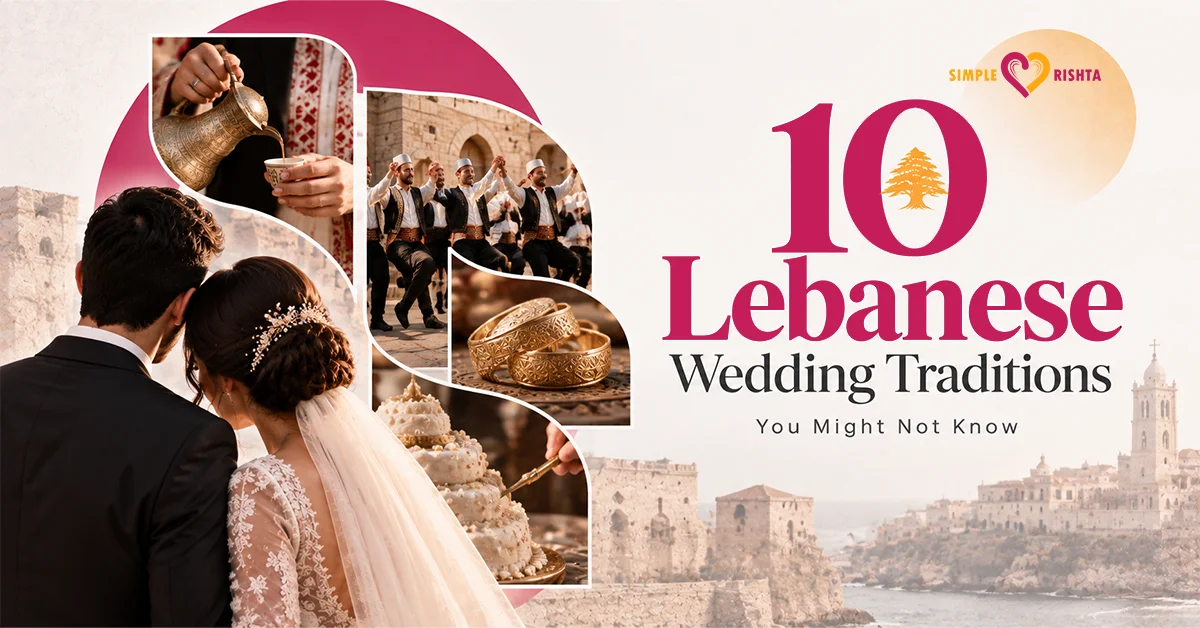
If there is one Lebanese wedding tradition you should know, it is the Zaffe. This lively musical procession is one of the most recognizable Lebanese wedding customs, welcoming the bride and groom into the celebration. Drummers, singers, dancers, and family members may join the procession, creating an energetic entrance.
Importantly, Zaffe and Dabke are not the same. The Zaffe is the wedding procession, while Dabke is a traditional group dance that guests may perform during the procession and later at the reception. In some celebrations, the Zaffe may even begin outside the venue or near the couple’s home.
| Feature | Zaffe | Dabke |
| Type | A wedding procession or grand entrance | A traditional group folk dance |
| Purpose | To welcome and celebrate the bride and groom | Performed by guests and dancers as a festive celebration |
| Performers and Setup | Led by drummers, trumpeters, dancers, and sometimes singers | Dancers stand side by side in a line or semicircle, holding hands or shoulders |
| Role of the Couple | The bride and groom walk through or are lifted as the center of the procession | The couple may join the line, but the focus is on group coordination |
| Geographic Region | Widely associated with Lebanese and broader Levantine weddings | Popular across Lebanon, Palestine, Jordan, Syria, and Iraq |
Dabke (Dancing All Night)
You do not simply watch Dabke at many Lebanese weddings. You join it.
Guests form a line or circle, hold hands or shoulders and follow the rhythm together. A skilled dancer may lead the group, while the line keeps growing as more people join.
Dabke is much broader than weddings. It is a Levantine folk tradition performed at celebrations and community events. A USC Digital Folklore Archives interview with a Lebanese American participant also describes Dabke and traditional drums as central parts of Lebanese wedding celebrations.
That communal element is what makes it special. Suddenly, the dance floor belongs to everyone.
Cutting the Cake with a Sword
Lebanese wedding cakes can be very large, sometimes reaching nine or ten tiers. Instead of using a regular knife, the bride and groom often cut the cake together with a ceremonial sword. In some families, the sword is even passed down through generations. Fireworks may also light up the moment, making the cake cutting a memorable part of the celebration.
Fine Dining
Food is an important part of Lebanese wedding celebrations, and the meal is often generous enough to feel like a feast. A traditional spread may begin with mezze, small shared dishes such as hummus, tabbouleh, fattoush, moutabal, labneh, stuffed grape leaves (warak enab), and kibbeh.
The main meal may include grilled kafta, shish tawook, lamb or chicken, rice dishes, and other Lebanese specialties. Larger celebrations may feature an even more elaborate selection of meat and rice dishes.
And then come the sweets. Guests may be served baklava, maamoul, knafeh, and other Lebanese pastries, alongside the wedding cake. In many celebrations, the variety and abundance of food are part of the hospitality itself.
In fact, food is one of the Lebanese wedding traditions that celebrations are known for, bringing guests together around a generous table.
Dramatic Wedding Photos
Photography also plays a big role in Lebanese weddings. Couples often take plenty of posed portraits, family photos, and dramatic shots during the wedding day. Outdoor locations and beautifully decorated venues can provide the perfect backdrop for these memorable pictures.
The Jurn el Kebbe (Strength Tradition)
In some villages, the groom or a member of his family was expected to lift a heavy stone mortar called Jurn el Kebbe. The act symbolized strength and the ability to care for the bride and her family.
The Playful Bride Kidnapping
One of the more playful customs involved the groom’s relatives trying to “kidnap” the bride while her family protected her. If the groom’s side managed to take her away, they celebrated the victory. If they failed, the two families could joke about it.
Stomping on Guests’ Feet
Another playful tradition involved the bride and groom stepping on the feet of unmarried guests. The gesture symbolized leaving their single lives behind.
Throwing Four Apples
One older tradition involved throwing four apples in four directions after the ceremony. According to the custom, the unmarried young woman who caught an apple would be the next one to marry.
Jalab El Aroos (Bringing the Bride)
Jalab El Aroos, meaning “Bring the Bride,” is a traditional Druze wedding day ritual in Lebanon. The groom and his family go to the bride’s home with a Zaffe, accompanied by drummers and dancers in traditional Druze clothing.
They sing and dance along the way, then bring the bride back to the groom’s home. It turns her arrival into a lively celebration shared with family and neighbors.
The Couple Leaves Last
Unlike the grand wedding exits seen in many cultures, Lebanese newlyweds traditionally stay until the very end of the reception. Leaving before their guests is considered impolite. Instead, the couple remains until the celebration winds down and personally says goodbye to every remaining guest, often going table by table.
This warm tradition reflects the deep rooted importance of hospitality, respect, and making every guest feel valued on such an important day.
Lebanese Post-Wedding Traditions
Money and Dough on the Door
After the newlyweds arrived at their home, a piece of dough or khamire containing money could be placed on the door. The custom symbolized prosperity, abundance, and good wishes for the couple. In some traditions, family and guests also attached money to the dough.
Carrying the Bride into the Home
The groom may carry his bride across the threshold when they enter their new home. Besides being a romantic gesture, the tradition also helped the bride avoid tripping over her long wedding dress.
Stealing a Household Item
After the couple moved into their new home, the groom’s relatives might secretly take a small household item as a joke. This playful custom was another way for the two families to build a bond and keep the celebrations going.
Lebanese Wedding Traditions: Muslim, Christian and Interfaith Weddings
One of the most important things to understand about Lebanese wedding traditions is that culture and religion are not always the same thing.
Traditions such as the Zaffe, Dabke, family celebrations, and Lebanese food can be shared by families from different religious backgrounds. However, the actual marriage ceremony and its customs depend on the couple’s faith. For example, Islamic wedding traditions and customs may include a Nikah or Katb el Kitab, while Christian couples may follow a church wedding ceremony.
This distinction helps explain why Lebanese weddings can look different from one family to another while still sharing many of the same cultural traditions.
| Wedding Type | Religious Ceremony | Cultural Traditions |
| Muslim | May include an Islamic marriage contract, consent, and mahr | Zaffe, Dabke, henna, family celebrations, and Lebanese food may also be included |
| Christian | Church ceremony according to the couple’s denomination | Zaffe, Dabke, music, food, and family customs may be included |
| Interfaith | Ceremony depends on the couple, denomination, and religious authorities | Couples may combine Lebanese cultural customs with elements from both backgrounds |
Final Thoughts
What makes Lebanese wedding traditions so special is how they bring together family, faith, culture, and celebration. From the joyful zalghouta and energetic Zaffe to the lively Dabke and shared family moments, each tradition adds meaning to the celebration.
Some customs have changed or faded with time, while others continue in modern weddings. Still, the meaning behind them remains: celebrating love, bringing families together, and keeping cultural heritage alive for the next generation.
Frequently Asked Questions
What are the most important Lebanese wedding traditions?
Some of the key traditions include khotbeh (the formal engagement), the henna night, the Zaffe procession, the joyful zalghouta trill, sword cake cutting, and the giving of gold or cash gifts to the bride.
What does a traditional Lebanese wedding dress look like?
Most Lebanese brides wear an elegant white wedding gown, often created by a Lebanese designer, with a veil or styled hijab. Gold jewelry is also an important part of the bridal look and may be gifted by the bride and groom’s families.
How long does a wedding in Lebanon last?
Lebanese wedding celebrations can last for several days, with events such as the henna night leading up to the main wedding. The wedding reception itself often continues late into the night, and the couple may stay until the last guests leave.
Who typically pays for a Lebanese wedding?
Traditionally, the groom and his family cover most wedding day expenses, while the bride’s family may host the engagement celebration. The groom’s family may also give the bride gold or other jewelry as a traditional gift.
Why are Lebanese weddings so lavish?
Lebanese weddings are often large and festive because they bring together extended families, friends, and communities. Hospitality, generous food, lively music, and cultural traditions are important parts of the celebration. Zaffe, Dabke, elaborate decorations, entertainment, fireworks, and grand wedding cakes can also add to the festive atmosphere.
What is the average cost of a Lebanese wedding?
A typical Lebanese wedding can cost around 40,000 to 55,000 dollars, although the total varies widely depending on the guest count, venue, food, decor, attire, and level of luxury.
What to wear to a Lebanese wedding?
Lebanese weddings are usually glamorous and formal, so dressing up is encouraged. Women can opt for elegant gowns or cocktail dresses with heels, while men can wear a tailored suit or tuxedo. Avoid white, ivory, or bridal shades, and choose your outfit based on the venue, time, and dress code.
What are the customs and rituals associated with a Lebanese wedding?
Lebanese weddings are known for lively celebrations, strong family involvement, and cultural traditions. Common customs include the Henna Night, Zaffe grand entrance, Zalghouta ululation, Dabke dancing, sword cake cutting, fireworks, and traditional Lebanese food. Religious ceremonies and other customs may vary depending on the couple’s religion, region, and family traditions.