What is Civil Marriage? Complete Guide with Legal Meaning & Process
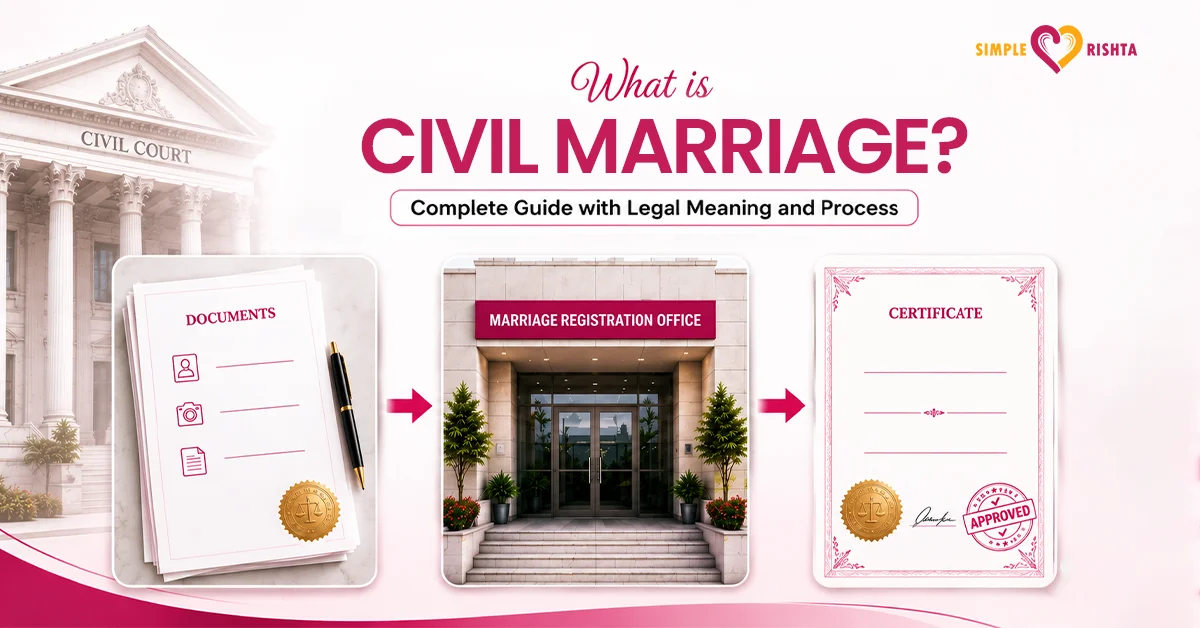
Marriage is not just two signatures on paper. It is two people starting a shared legal, emotional, and social life together. But what if this bond is formed through law instead of rituals?
That is where a Civil Marriage comes in. It is a concept many people hear about, but few really understand what is civil marriage and how it actually works in real life.
What is Civil Marriage?
A Civil Marriage is a legally recognized marriage performed and registered by a government-authorized official rather than a religious authority. In other words, it is a marriage that exists under the law of a country. Once registered, the couple receives legal recognition and, as a result, enjoys the rights and protections provided by that country’s marriage laws.
Moreover, this legal status ensures that the marriage is valid for official purposes such as documentation, inheritance, and immigration.
What Does Civil Marriage Mean in Practice?
Imagine a couple who wish to marry but belong to different faiths, or perhaps they prefer a non-religious ceremony. In such cases, they can legally marry before a marriage officer, registrar, or judge.
After that, the government records the marriage, issues a marriage certificate, and officially recognizes the couple as legally married. As a result, this legal recognition plays an important role in many areas of life, including:
- Property rights
- Inheritance
- Tax benefits
- Spousal benefits
- Child custody rights
- Medical decision-making rights
We are also seeing big legal changes worldwide. For example, civil marriage in Abu Dhabi is now legally recognized through secular laws designed for foreigners and non-Muslims. It shows how countries are adapting marriage laws to modern, multicultural societies.
Types of Civil Marriages
1. Standard Civil Marriage
First, the Standard Civil Marriage is the most common type of civil marriage. A government official, such as a judge, magistrate, or registrar, conducts it. Couples must get a marriage license, bring witnesses, and meet basic legal requirements like age and legal capacity.
2. Civil Union
Next, a Civil Union is another type of marriage civil found in many countries. It gives couples legal rights and protections from the state. However, some countries may still use a different legal name, even if the rights remain the same for both opposite-sex and same-sex couples.
3. Mandatory Civil Marriage
Finally, in some countries, there is a Mandatory Civil Marriage. The law requires couples to complete a civil ceremony first. A religious ceremony alone is not legally valid. After civil registration, couples may also hold a religious ceremony if they choose.
| Feature | Standard Civil Marriage | Civil Union | Mandatory Civil Marriage |
| Core Definition | The most common form of non-religious marriage. | A legal relationship status established by the state. | A legal requirement in countries where religious weddings have no law-binding power. |
| Key Features | Conducted by a judge, magistrate, or registrar. Requires a license and witnesses. | Often used under a different legal name; open to opposite-sex and same-sex couples. | The civil ceremony must happen first. Any religious ceremony is strictly optional. |
| Legal Status | Fully recognized as a legal marriage by the government. | Grants legal rights and protections, though international recognition varies. | The state-run civil ceremony is the only piece that makes the union legally valid. |
Step-by-Step Process
Although procedures vary by country, the basic state marriage process is usually similar.
1. Meet Eligibility Requirements
Both individuals must:
- Be of legal marriage age
- Give free consent
- Not already be married to someone else
- Meet citizenship or residency requirements where applicable
2. Submit Required Documents
Common documents include:
- National ID or passport
- Birth certificate
- Proof of residence
- Divorce decree (if previously married)
- Death certificate of former spouse (if applicable)
3. File Marriage Notice
Many countries require couples to submit notice before the wedding date.
4. Attend the Ceremony
The ceremony is conducted by a registrar, judge, or marriage officer.
5. Receive Marriage Certificate
Once the marriage is registered, the couple receives an official marriage certificate.
Civil Marriage Requirements
| Feature | Purpose | Document |
| Legal Age | Ensures lawful consent. | Birth Certificate / ID |
| Valid Identification | Confirms identity to the state. | Valid government ID (Passport, DL) |
| Witnesses | Verifies and legally solemnizes the ceremony. | Witness IDs / Presence |
| Marriage Application | Filed with the local authority to create a legal record. | Marriage license form |
| Registration Fee | Covers administrative processing costs. | Receipt of payment |
| Proof of Single Status | Confirms no existing marriage. | Single status certificate / Affidavit |
| Divorce Decree (If applicable) | Proves prior to marriage was legally dissolved. | Official decree or death certificate |
| Birth Certificate | Confirms age eligibility. | Original or certified copy of birth record |
The Benefits of Civil Marriage
There are several important benefits of civil union, and most of them go far beyond ceremony or tradition. In fact, civil marriage actively protects both partners in daily life and in long-term legal matters.
- Legal Protection
First, civil marriage gives both spouses strong legal protection. If disputes, divorce, or inheritance issues arise, courts recognize the marriage and enforce legal rights. Without this registration, proving the relationship becomes difficult and time-consuming.
- Property Rights
Next, civil marriage helps couples secure property rights. In many countries, spouses can share ownership of assets, protect joint investments, and receive legal support in case of separation or disputes.
- Family and Social Benefits
Moreover, governments often provide family-related benefits to legally married couples. These may include healthcare coverage, tax advantages, and access to social welfare programs that unmarried partners cannot easily claim.
- Inheritance and Financial Security
In addition, an official marriage ensures clear inheritance of rights. A legally recognized spouse can inherit property, claim pensions, and access insurance benefits. Without civil registration, families sometimes face legal complications that delay or block these rights.
- Medical and Decision-Making Rights
Another important benefit is medical authority. A civil spouse can make emergency medical decisions, visit hospitals without restrictions, and access health information when needed. This becomes critical during emergencies.
- International Recognition
Furthermore, this type of legal union is widely recognized across countries. This helps couples with immigration, spousal visas, and relocation. Religious-only marriages are not always accepted internationally, which can create legal challenges.
According to organizations like the United Nations and the World Bank, civil union marriage registration improves access to legal identity, inheritance protection, and social services.
Similarly, a 2022 study in Frontiers in Public Health (indexed on PubMed) found that civil registration increases access to healthcare, economic stability, and legal protection for families.
Civil Marriage in Islam
Nikah, or marriage in Islam, is not just a formality. It is a sacred contract that carries clear conditions, rights, and responsibilities for both partners.
Moreover, in Islam, great importance is given to fulfilling these Nikah requirements properly. An official marriage alone may satisfy state law; however, in Islamic understanding, it is only valid if the essential Nikah conditions have been met.
Therefore, both religious and legal aspects are often considered together to ensure marriage is complete in every sense.
These conditions generally include:
- Mutual consent
- Witnesses
- Mahr
- Compliance with Islamic principles
For Muslims, a civil union can often be combined with a religious Nikah to satisfy both legal and religious obligations.
What is a Civil Marriage in Pakistan?
In Pakistan, marriages are generally governed by personal and religious laws. Muslim marriages are typically registered through Nikah registration procedures, which also follow the essential Muslim marriage rules.
However, civil registration remains important because it creates an official legal record recognized by government authorities. A marriage certificate serves as proof of marriage for passports, visas, inheritance matters, and other legal documentation.
Civil Marriage in South Africa
In South Africa, a civil marriage is a legally recognized union conducted under the country’s marriage laws by an authorized marriage officer. Marriage grants legal rights and responsibilities to both spouses.
Civil Marriage in the UAE
The UAE has introduced modern civil laws to support a diverse population, especially expatriates and non-Muslims. For example, civil marriage in Abu Dhabi now allows non-Muslim couples to register their marriage under civil law, offering a smooth and straightforward legal process without religious requirements.
Civil Marriage in Saudi Arabia
Civil unions are not allowed in Saudi Arabia. All marriages in the Kingdom must be religious and conducted in accordance with Islamic law (Sharia), which requires the presence of a male guardian (Wali), Muslim witnesses, and pre-marital medical tests.
Civil Unions in the EU
The civil union in Europe is widely recognized as the legal foundation of marriage in most countries. In many European nations, couples are required to complete a civil ceremony at a registry office before any religious ceremony takes place. This ensures the marriage is legally valid under state law. The process is usually simple, involving registration, required documents, and a short ceremony conducted by a government official.
Final Thoughts
Civil marriage is not the opposite of a religious or traditional marriage. Instead, it is a legal system that formally recognizes a relationship and protects both partners. If you want to understand what is civil marriage; it is more than just signing papers. It creates clear rights, responsibilities, and legal protection for both individuals.
It is more than just signing papers—it creates clear rights, responsibilities, and protections for both partners.
In fact, when you understand how civil marriage works, it becomes easier to make better decisions about your future. Whether you are exploring marriage options or simply learning about the law, this knowledge helps you stay informed and prepared.
Moreover, many couples choose to combine civil registration with their religious traditions. This way, they get both legal security and spiritual fulfillment.
In today’s world, where marriages often involve different countries, courts, and immigration systems, state recognition is not just a formality. It actively protects you, your spouse, and your shared future.
Frequently Asked Questions
Is civil marriage allowed in Islam?
Yes, it is generally permissible as long as it does not contradict Sharia law. It is often recommended for Muslims living in non-Muslim countries to secure legal rights.
What is civil marriage in Pakistan?
In Pakistan, civil marriage refers to the formal registration of a Nikah under the Muslim Family Laws Ordinance 1961. After the Nikah Nama is submitted to the Union Council, a Computerized Marriage Registration Certificate (MRC) is issued through NADRA’s civil registration system.
What is civil marriage in South Africa?
In South Africa, civil marriage is governed by the Marriage Act 25 of 1961. Both parties must consent freely, be of legal age (18, or 16 with parental consent), and the ceremony must be conducted by a licensed marriage officer.
What is the legal age for marriage in South Africa?
The legal age for marriage in South Africa without special permission is 18 years for both men and women. However, in some cases, the law still allows minors under 18 to marry if they have proper consent from parents or legal authorities.
Is Civil Marriage in the Community of Property?
In many countries like South Africa, Namibia, and some parts of Europe, a civil marriage is automatically considered a community of property. This means both spouses share all their assets and debts together as one joint estate.
However, couples can choose a different option. If they do not want to share everything, they must sign a legal agreement called an Ante-Nuptial Contract (ANC) before getting married. This makes the marriage out of community of property, so each person keeps their own assets and debts.
What are the benefits of civil marriage?
Key benefits include inheritance rights, spousal visa eligibility, joint tax filing, health insurance access, property co-ownership protections, hospital visitation rights, and pension survivor benefits.
What is the civil marriage rules I should know before the wedding?
Before a civil marriage, couples must choose their property regime before the ceremony, because it usually cannot be changed later. They should also confirm that the marriage officer or officiant is legally authorized to perform the ceremony. In some countries, couples may also need to give advance notice or apply for a marriage license before the wedding.
What are the civil marriage requirements?
Civil marriage generally requires both partners to meet the legal age and give free consent. The ceremony must be conducted by an authorized officer in the presence of at least two witnesses. After the ceremony, the marriage must be officially registered with the relevant government department to become legally valid.
What is a Civil Union Marriage?
A civil union marriage is a legal partnership that gives couples many of the same rights as a civil marriage. It was first introduced mainly to recognize same-sex couples, but many countries now allow it for all couples.
It provides legal protection in areas like property, inheritance, and healthcare decisions. However, the name and legal status may still be different from a standard civil marriage, depending on the country.
Can a Civil Marriage Replace a Nikah Contract?
A civil marriage cannot fully replace a Nikah contract in Islam. A civil marriage is a legal agreement recognized by the state, while a Nikah is a religious contract with specific Islamic requirements. However, many Muslim couples choose to complete both a civil marriage and a Nikah, so they are protected legally and fulfill their religious obligations.