Getting Married in a Dream: Meaning & Interpretation
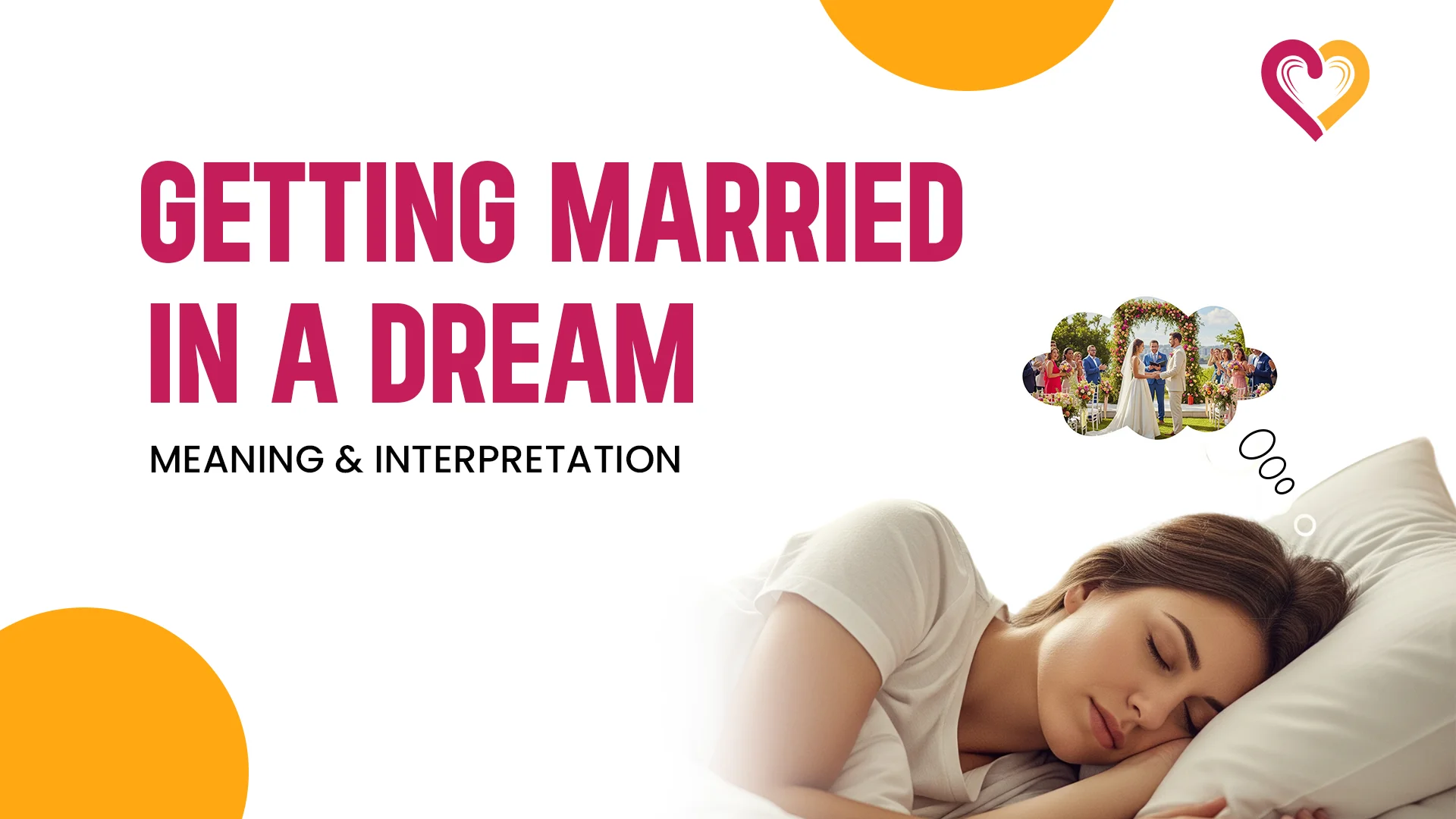
Few dreams stay with you the way this one does. You wake up having just been married — sometimes to someone you love, sometimes to a stranger whose face you cannot place — and the first question is always the same: does this mean something? It is one of the most searched dreams in the world, and in Muslim households it carries extra weight, because marriage in Islam is not just a life event but half of one’s faith.
The short answer is that it usually does mean something, but almost never what people assume. A marriage dream is rarely a forecast of an actual wedding. This guide walks through what Islamic tradition genuinely says about it — the three categories dreams fall into, what classical interpreters like Ibn Sirin and al-Nabulsi actually wrote, how the meaning shifts for someone married versus unmarried, what the symbols inside the dream point to, and how to tell a dream worth reflecting on from one worth letting go.
Dreams themselves remain one of the more mysterious things about sleep. They can be completely random — flying, falling, bumping into someone from your past. Science is still working out why we dream at all, though many researchers believe it supports memory, emotion and problem-solving. What is certain is that people across every era and culture have given dreams meaning. For example, getting married in a dream in Islam can symbolise a new beginning or a life change.
Similarly, in Christianity, people see dreams as messages from God. In contrast, Hinduism views them as signs of karma or desires. Meanwhile, Buddhism treats dreams as part of the mind’s illusion, and Judaism considers dreams to carry deep symbolic messages, especially in sacred texts.
Sigmund Freud, a famous neurologist and psychologist, once said,
“Dreams are the royal road to the unconscious.”
Which means dreams might show us what’s really going on in our minds.
In Islam, seeing yourself getting married in a dream most commonly symbolises incoming goodness, a new chapter in life, or spiritual progress rather than an actual wedding. Classical interpreters such as Ibn Sirin read it as a change in rank or condition — new responsibility, provision, or relief from something that had been weighing on you. If the dream felt peaceful and clear, scholars generally consider it a positive sign worth making du’a about; if it felt frightening, it is treated as a shaytani dream and dismissed rather than interpreted.
Why Do We Dream About Marriage?
First things first — dreaming about marriage is common. And no, it doesn’t always mean you’re about to receive a rishta proposal tomorrow. In general, marriage dreams can reflect:
- A desire for companionship
- A new chapter or life change
- Internal emotions or spiritual growth
- Real-life thoughts or discussions about marriage
But when we look at dreams through a religious or cultural lens, they often have deeper meanings. For example, getting married in a dream in Islam isn’t just random — it can be symbolic. Islamic dream interpretation (known as taaber) often sees dreams as spiritual signs. They show messages from Allah or reflect on what’s on your mind. And yes, dreams can have important meanings.
The Three Types of Dreams in Islam
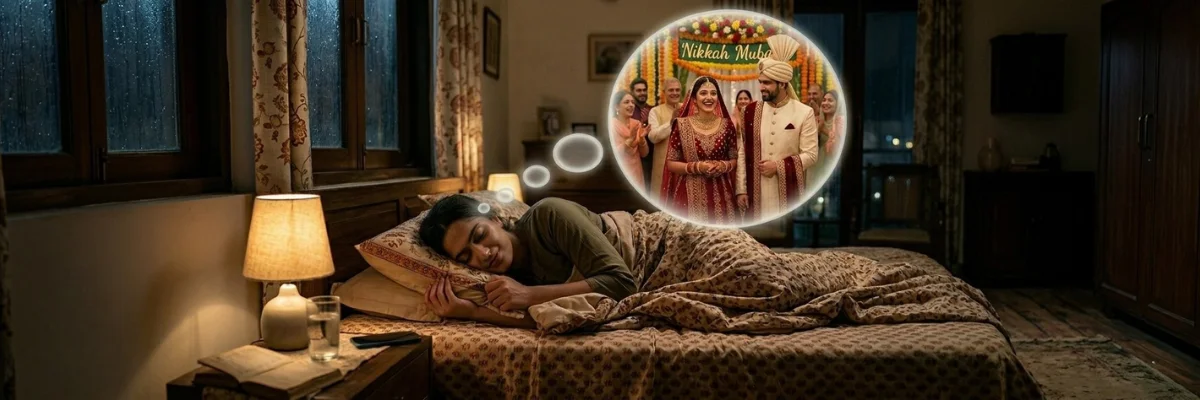
In Islam, dreams are classified into three categories, as described in hadith literature:
| Type | Arabic Term | Source | Meaning |
|---|---|---|---|
| Good/true dream | Rahmani (رحمانی) | From Allah | Positive signs, guidance, or good news |
| Self-generated dream | Nafsani (نفسانی) | From one’s own thoughts | Random; reflects daily worries, no spiritual meaning |
| Disturbing dream | Shaytani (شیطانی) | From Shaytaan | Nightmares or unsettling dreams; seek refuge in Allah |
The Prophet Muhammad (PBUH) said: “Dreams are of three types: a dream from Allah, a dream which causes distress and which comes from the Shaytaan, and a dream which comes from what a person thinks about when he is awake.” (Sahih Muslim, 2263)
Getting Married in Dreams and Their Interpretation

Many Islamic scholars say that seeing marriage in a dream can be a sign of blessings. Marriage in Islam itself is a blessing, and seeing it in a dream may mean that Allah is preparing something good for you—maybe success, peace, or spiritual growth.
Furthermore, some palmists also try to answer this question,” apki shadi kab aur kaise hogi” by looking at your hands and telling your fortune. But in Islam, dreams can also offer spiritual signs or personal messages.
For example, if you see yourself marrying a righteous person in a dream, it could mean that you are going to receive guidance or come closer to your faith. Let’s explore some common dream scenarios and their possible Islamic meanings.
| Dream Scenario | Islamic Interpretation |
|---|---|
| Marrying a righteous stranger | Sign of incoming goodness, guidance, or a new, blessed opportunity |
| Marrying someone you love | Reflection of sincere feelings; a prompt to make du’a for what you desire |
| Forced marriage in a dream | May indicate feeling trapped or pressured in waking life |
| Already married and dreaming of another marriage | Could indicate a new life phase, personal growth, or desire for spiritual renewal |
| Attending someone else’s wedding | Often interpreted as sharing in the blessings or happiness of others |
| Seeing a wedding ceremony without participating | May symbolize witnessing a major change coming to someone close |
1. Marrying a Stranger
If you dream of marrying someone you do not recognize, Islamic scholars interpret this as a sign of something new entering your life — a new opportunity, journey, relationship, or responsibility. The stranger represents the unknown blessings Allah may be preparing for you.
2. Marrying Someone You Love
This type of dream reflects deep emotional attachment. In an Islamic context, it is a reminder to make sincere du’a and place your trust in Allah’s plan for your life. It does not necessarily predict the future but may signal the sincerity and depth of your feelings.
3. Already Married and Dreaming of Marriage
Islam categorically prohibits forced marriage (Quran 4:19). If you experience a forced marriage dream, Islamic scholars suggest it may reflect a sense of pressure or powerlessness in your waking life. It is a sign to seek guidance, pray for strength, and, if necessary, seek trusted counsel.
4. Forced Marriage in a Dream
For a married person, dreaming of marriage again is generally interpreted as a desire for renewal — either in the current relationship, personal spiritual life, or a new phase of responsibility. It is not typically interpreted as a literal prediction.
What Ibn Sirin and Al-Nabulsi Said About Marriage Dreams
Almost every modern article on this topic traces back to two classical authorities, so it is worth naming them. Muhammad Ibn Sirin (654–729 CE), the Basran scholar whose name is attached to the best-known Arabic dream compendium, held that marriage in a dream usually points to a change in rank or condition rather than to a literal wedding — a new responsibility, a position of authority, or an expansion in provision. Where the spouse in the dream was a stranger, he read the dream as being about the dreamer’s own circumstances, not about a real person.
Abd al-Ghani al-Nabulsi (1641–1731 CE), writing in Ta’tir al-Anam, added the nuance most people miss: the same image can carry opposite meanings depending on the feeling attached to it. A wedding filled with light, calm and celebration is read as goodness. A wedding accompanied by wailing, mourning clothes or dread is read as difficulty or warning. This is why two people can both dream of “getting married” and receive completely different interpretations.
One caution worth stating plainly. This discipline is called ta’bir al-ru’ya, and the scholars who built it insisted it was probabilistic, dependent on the dreamer’s state, and never binding. No interpretation — theirs or anyone else’s — should override an obligation, a relationship, or a decision you make while awake.
An Unmarried Girl or Single Man Dreaming of Marriage
This is the most searched version of the dream and the most commonly misread. For someone unmarried, a wedding dream very often has an ordinary explanation: marriage is already on their mind, or on their family’s, and the sleeping mind simply replays it. In Islamic terms that makes it a nafsani dream — a reflection of the self, not a message.
Where classical interpreters did read meaning into it, the reading was usually favourable. For an unmarried woman, seeing herself as a bride in bright, clean clothing is associated with honour, relief from worry, or good news reaching her household. For an unmarried man, marrying in a dream is more often linked to work, a new venture, or a responsibility he is about to take on than to an actual proposal.
What it is not is a timetable. A dream will not tell you when. If the real question underneath the dream is “when will this finally happen for me”, the honest answer sits in effort and process rather than symbolism — and practical remedies for delay in marriage are a far more useful place to put that energy.
Seeing Someone Else’s Wedding or Attending a Marriage in a Dream
Not every marriage dream is about you. Plenty of people dream of a sibling’s nikah, a friend’s wedding, or of sitting as a guest at a celebration they do not recognise at all. Classical interpretation treats attending a wedding as a broadly positive image, associated with gatherings, shared happiness, sustenance, and reconciliation between people who had drifted apart.
The details shift the reading. A wedding you attend with ease and joy is read differently from one you arrive at late, uninvited, or unable to enter. Dreaming of a specific living person’s marriage is generally understood as being about your relationship with them or your hopes for them — not as a prediction about their life. And a celebration that turns into mourning, or mourning that turns into celebration, was treated by interpreters as an inversion, which is exactly why such dreams were never read at face value.
Common Wedding Symbols in Dreams and What They Mean
Interpreters paid close attention to the objects and details inside a marriage dream, because that is often where the meaning actually sits. Some of the recurring ones:
- The nikah being recited — associated with a binding commitment or agreement in waking life, not necessarily a marital one.
- White or bright clothing — linked to clarity, honour and relief. Dark, torn or mourning clothing was read the opposite way.
- A ring placed on the hand — associated with a promise, a responsibility being accepted, or something entering the dreamer’s ownership.
- Mehndi and adornment — connected to celebration, beauty, and the attention of family.
- An unknown bride or groom — read as being about the dreamer’s own condition rather than a real person.
- The wedding meal or walima — associated with expansion in provision and with people gathering around you.
None of these is a fixed code. The same ring can mean commitment for one dreamer and burden for another, depending entirely on how it felt. If you want to understand what these symbols represent in practice rather than in symbolism, it helps to first know what a nikkah ceremony actually involves.
When to Take a Dream Seriously
Not every dream carries a spiritual message. According to Islamic tradition, a dream is worth reflecting on when:
- You remember it clearly after waking
- You feel a sense of peace, awe, or spiritual weight
- The same dream repeats on multiple occasions
What to do with a meaningful dream: The Prophet (PBUH) advised sharing good dreams only with someone you trust and love. You may also pray two Rak’ahs of Shukr (gratitude prayer), make du’a for understanding, and consult a knowledgeable Islamic scholar (alim) for interpretation if needed.
What to do with a disturbing dream: Recite A’oodhu billahi min ash-shaytaan ir-rajeem, spit lightly to your left three times, and turn to the other side. Do not share the dream with anyone. The Prophet (PBUH) said this will prevent the dream from causing harm. (Sahih Muslim, 2261)
Conclusion
Getting married in a dream (or khawab mei apni shadi dekhna) is one of the most common dreams there is, and in Islamic tradition it is usually read as a good sign — new beginnings, incoming provision, a change in status, or spiritual growth. But the meaning is never fixed. It moves with how you felt inside the dream, what is happening in your life right now, and the small details you still remember after waking.
The most useful thing to take from all of this is restraint. Classical scholars treated dream interpretation as probable rather than certain, and warned against building real decisions on it. Be grateful for a dream that left you at peace, seek refuge from one that disturbed you, share it only with someone who genuinely wishes you well, and let it encourage you rather than direct you.
And if the dream has left you thinking seriously about marriage itself, act on it while awake. Make du’a, involve your family, pray Istikhara before you commit, and look for a partner through a platform you can actually trust. Simple Rishta helps families in Pakistan and abroad find verified, serious matches — which is how a dream becomes a decision.
Frequently Asked Questions
What does getting married in a dream mean in Islam?
In Islam, getting married in a dream is generally a positive sign (Rahmani dream) that may symbolize new beginnings, incoming blessings, spiritual growth, or a major life change. Its exact meaning depends on the emotions felt, the people involved, and the details remembered after waking.
Is seeing your own wedding in a dream a good sign in Islam?
Yes, in most cases it is considered a good sign. Islamic scholars generally interpret marriage dreams as symbols of goodness, provision (rizq), or positive life transitions — provided the dream felt peaceful and clear.
What should I do after having a meaningful dream in Islam?
Pray two Rak’ahs, make du’a for understanding, write the dream down, and share it only with someone you deeply trust. For significant dreams, consulting a knowledgeable Islamic scholar (alim) is recommended.
Does dreaming of marriage mean you will get married soon?
Not necessarily. Most Islamic scholars caution against treating dreams as literal predictions. A marriage dream more often reflects an emotional state, spiritual condition, or life transition than a direct foretelling of a future event.
What is the difference between Rahmani and Shaytani dreams in Islam?
Rahmani dreams come from Allah, feel peaceful, and may carry spiritual guidance or good news. Shaytani dreams come from Shaytaan, are disturbing or frightening, and should be dismissed by seeking refuge in Allah — not interpreted or shared.
What does it mean when an unmarried girl sees her own marriage in a dream?
For an unmarried woman, a wedding dream is most often a nafsani dream — a reflection of what is already on her mind or her family’s. Where classical interpreters did read meaning into it, seeing yourself as a bride in bright, clean clothing was linked to honour, relief from worry, or good news reaching the household. It is not a date or a prediction.
Is dreaming of marrying a deceased person a bad sign in Islam?
Not automatically. Classical interpreters generally read a peaceful marriage dream involving someone who has passed away as a sign of ease, settled debts, or a long-standing matter finally resolving. Where the dream is frightening, scholars advise treating it as a prompt for du’a, sadaqah and isal-e-sawab for the deceased rather than searching for a hidden meaning in it.
Should I pray Istikhara after a marriage dream?
Istikhara is for making a real decision, not for decoding a dream. If the dream has moved you to actually consider a proposal or a person, then praying Istikhara is the right next step. If there is no decision in front of you yet, du’a and patience are enough.