Types of Marriage in Pakistan - Laws, Culture & Trends in 2026
SUMMARY
- Explains the types of marriage in Pakistan and how they are changing in 2026.
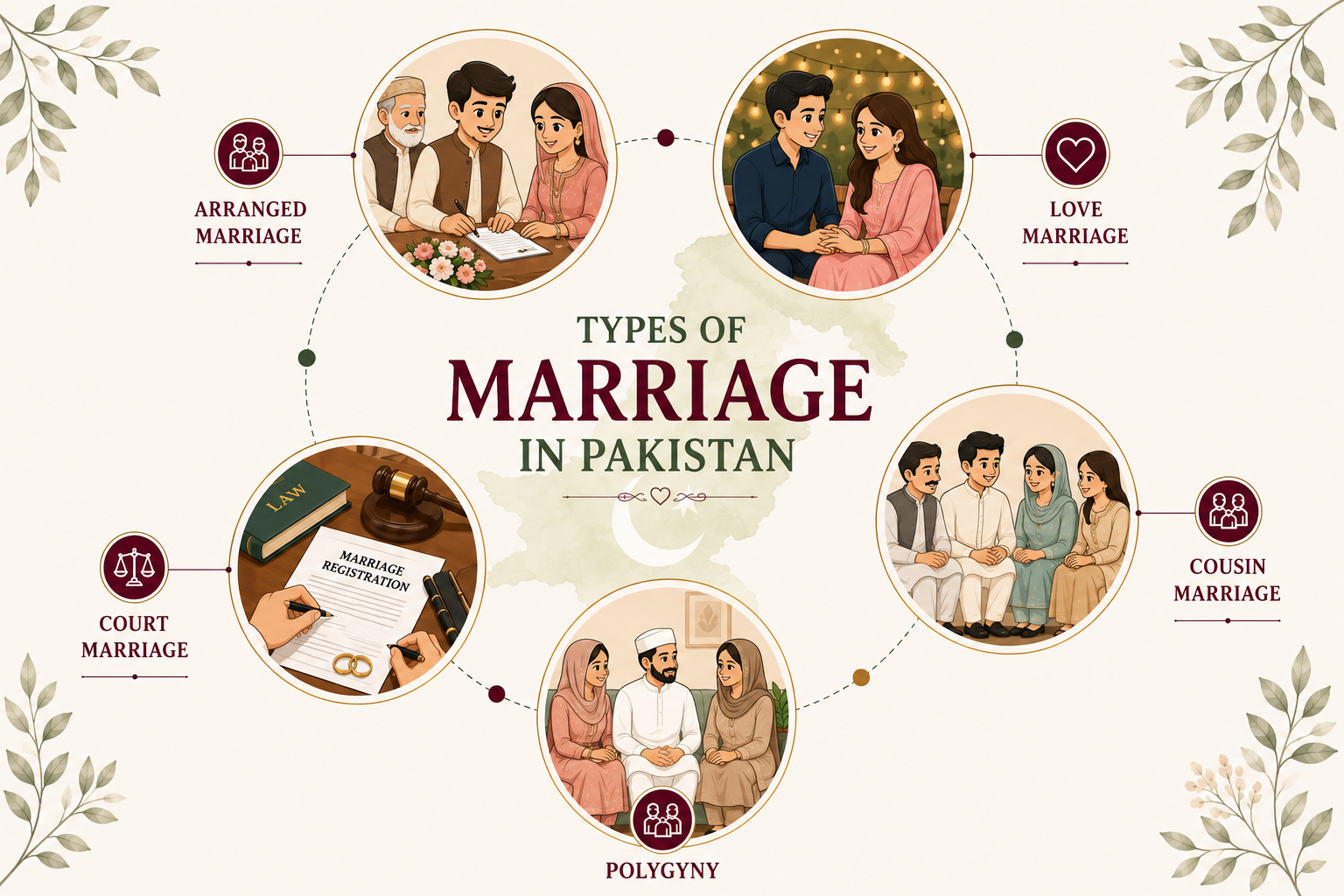
- Compares arranged, love, cousin, court, and polygynous marriages.
- Covers key marriage laws, rights, and legal requirements.
- Highlights recent trends and research on marriage in Pakistan.
- Discusses the growing role of online matchmaking and changing social attitudes.
- Answers common questions about marriage laws and practices in Pakistan.
Marriage is one of those life decisions that nobody takes lightly. In Pakistan, it carries even more meaning, because it is not just about two individuals. It often brings families, expectations, and plenty of opinions into the picture. While that can feel overwhelming, it also reflects how deeply marriage is valued here.
When we talk about the types of marriage in Pakistan, we are not looking at a single, fixed model. Instead, we are looking at a mix shaped by culture, religion, and changing social trends. Pakistan is incredibly diverse. A Punjabi family may approach marriage very differently from a Balochi or Pashtun household, and traditions, priorities, and even decision making styles can vary a lot.
Still, most marriages fall into a few familiar patterns. What is changing in 2026 is the mindset. People are asking more questions, making more personal choices, and trying to find a balance between tradition and individuality.
What Does Marriage Look Like in Pakistan Today?
According to UNICEF, Pakistan has one of the highest rates of child marriage in Asia, with around 18 percent of girls married before the age of 18. Meanwhile, a 2023 Gallup Pakistan survey found that nearly 70 percent of Pakistanis still prefer arranged marriages, although acceptance of semi-arranged setups has grown significantly among urban youth aged 18 to 30.
The average age of marriage in Pakistan has also been rising. In 2000, the median age for women was around 21. By 2023, it had climbed to roughly 24 years in urban areas, reflecting higher education levels and economic pressures.
Marriage in Pakistan is also legally defined. Under the Muslim Family Laws Ordinance 1961, all Muslim marriages must be registered through a nikah registrar, and polygamy is permitted only with the written permission of the first wife and approval from an Arbitration Council.
Types of Marriage Commonly Practiced in Pakistan
If you ask your grandmother, she will probably say there is only one right way to get married, the arranged way. But reality is far more diverse. Today, you will find several types of marriage coexisting across the country.
Arranged Marriage
Arranged marriage remains the most common type in Pakistan. Families take the lead, evaluating factors like education, financial stability, and family background. The couple typically meets a few times before the wedding.
Research suggests that this system works well. A 2012 study in the Journal of Comparative Family Studies found that couples in arranged marriages often report long-term satisfaction, partly due to strong family support. The key condition, however, is free consent from both individuals. If you are weighing your options, our guide on the pros and cons of arranged marriage looks at both sides in detail.
Love Marriage
Love marriage is still a bit controversial in many Pakistani families, but it is more common now than people usually admit. A 2022 Ipsos Pakistan survey found that around 1 in 4 urban Pakistanis had a love marriage or knew someone who did.
The main advantage is pre-existing familiarity, since couples communicate better and understand each other before nikah. The biggest challenge remains family disapproval. However, attitudes are shifting, especially in cities like Karachi, Lahore, and Islamabad, where families are becoming more open-minded when relationships respect cultural and religious values. Our comparison of love marriage and arranged marriage can help you think it through.
Cousin Marriage
Pakistan has one of the highest rates of consanguineous marriages in the world. A 2014 PLOS ONE study found that over 60 percent of marriages involve some family relation, with cousin marriages being the most common.
The main reasons are cultural. Families value trust, familiarity, and keeping wealth within close circles. However, health experts and the World Health Organization caution that repeated consanguineous marriages increase the risk of genetic conditions in children. This remains a sensitive topic where tradition and science do not always align.
Court Marriage
Court marriage is a legal option growing in quiet popularity, especially when families disagree. It takes place before a Nikah Registrar, is fully valid under Pakistani law, and provides immediate legal proof of marriage, which is useful for spousal rights, inheritance, and child custody.
It is not only for couples who elope. Many choose it for convenience or to formalize their relationship before a larger ceremony. Importantly, Islamic requirements still apply, so a wali and witnesses remain necessary under Muslim family law. You can read more about why court marriage in Pakistan is seen as rebellion, and legal consultation is always advised before proceeding.
Polygyny
Polygyny means a man has more than one wife at the same time. Pakistani law permits polygyny under the Muslim Family Laws Ordinance 1961, but with strict conditions. A man must obtain written consent from his existing wife and approval from the Union Council Arbitration Committee. Skipping this process is a punishable offence.
In practice, compliance is inconsistent. Polygyny is rare in cities and among educated families, though it does occur in some rural areas. It remains a topic where religious permission, legal requirements, and social concerns, especially for women, intersect uneasily.
| Feature | Arranged Marriage | Love Marriage | Cousin Marriage | Court Marriage | Polygyny |
| Who initiates | Parents or elders | The couple | Family or couple | The couple | The husband |
| Pre interaction | Limited to none | Extensive | Moderate to high | Extensive | Variable |
| Family approval | Central | Often challenging | High and expected | Usually absent | Often contested |
| Cultural status | Gold standard | Increasing | Deeply rooted | Social stigma | Legal but rare |
| Legal standing | Valid | Valid | Valid | Valid | Valid but requires permission |
| Consent | Required by law | Yes | Yes | Yes | Required from wife |
Marriage Laws in Pakistan You Should Know
Marriage in Pakistan is not just a cultural event, it is also a legal contract. Knowing the basic laws can really help couples and families avoid problems later.
Minimum Legal Age
Under the Child Marriage Restraint Act 1929, with later provincial updates, the minimum age is 18 years for boys and 16 years for girls at the federal level. However, Sindh province has set the minimum age at 18 for both boys and girls under its 2014 law.
Even with these laws, child marriage is still a concern in some rural areas, which is why awareness matters so much. The Pakistan Demographic and Health Survey 2017-18 found that 18.3 percent of women aged 20 to 24 were married before 18. The 2023 Census revealed that 641,887 adolescents aged 15 to 17 were already married, divorced, or widowed, with girls making up the vast majority.
Punjab is showing progress. Recent MICS 2024 data indicates that child marriage before age 18 dropped from 14.6 percent to 13.8 percent, and before age 15 fell from 3.3 percent to 2.5 percent.
Still, Balochistan and Khyber Pakhtunkhwa report far higher rates. These numbers remind us that early marriage is not just a rural issue. It is a national challenge tied to poverty, lack of schooling, and deep rooted norms. Our article on the advantages and disadvantages of early marriage looks at this in more depth.
| Province | Girls Married Before 18 (percent) | Boys Married Before 18 (percent) |
| Khyber Pakhtunkhwa | 26.3 | 5.3 |
| Sindh | 24.7 | 8.5 |
| Balochistan | 21.9 | 6.4 |
| Punjab | 13.8 | 3.0 |
Nikah Registration
Nikah registration is legally required in Pakistan. If a marriage is not officially registered, it can create serious issues later, especially for women, such as problems in inheritance claims, difficulties in divorce cases, and complications in child custody. So registration is not just paperwork, it protects legal rights.
Consent and Witnesses
For a valid marriage, both the bride and the groom must give free consent, and the nikah must be witnessed by two adult witnesses, usually two men, or one man and two women as per Islamic law practice. Without proper consent, a marriage is not valid.
Divorce Rights (Talaq-e-Tafweez)
In the Nikahnama, there is a column, Column 18, where a woman can be given the right to initiate divorce. This is called Talaq-e-Tafweez, and it is an important legal protection that many people overlook during marriage.
Polygamy Rules
A man cannot simply take another wife. Legally, he must get written permission from the Arbitration Council and approval from his existing wife or wives. Without this permission, the second marriage can lead to legal consequences.
Court Marriage Process
For couples choosing court marriage in Pakistan, the process requires a nikah registrar, two witnesses, and a valid CNIC. The union is then registered with the local union council. It sounds simple, yet social stigma still makes it emotionally exhausting for many. Understanding these basic rules helps couples make more informed and secure decisions about marriage in Pakistan.
Trends Shaping Pakistani Marriages in 2026
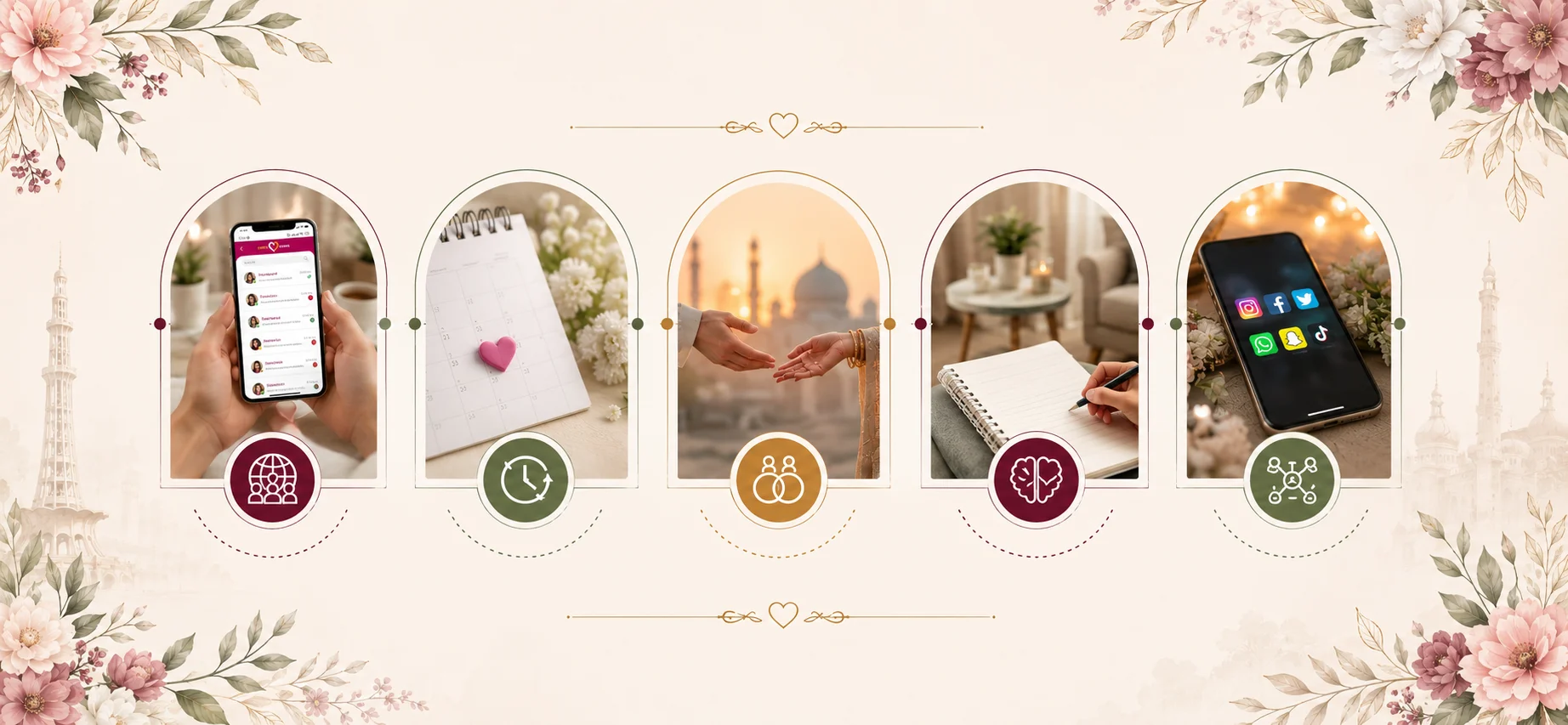
Marriage trends in Pakistan are changing, but not all changes are going in the same direction. Some shifts are positive and empowering, while others raise new concerns. Together, they show how complex modern relationships have become.
Online Rishta Platforms Are Now Normal
What used to depend only on family networks or rishta aunty culture is now moving online. Platforms like Simple Rishta and others help families view profiles in a more structured way. It feels faster, wider, and often less stressful than traditional searching.
Later Marriages Are More Accepted
More people, especially women, are choosing education and careers first. While social pressure to marry early still exists, it is slowly reducing, and delayed marriage is becoming more normal in cities.
Inter-caste and Interfaith Marriages Are Slowly Visible
These marriages are still rare and sometimes sensitive, but they are becoming more noticeable in big cities and among overseas Pakistani families. Society is gradually opening, even if cautiously.
Mental Health Is Part of Marriage Talks Now
Earlier, families mostly focused on finances and background. Now, more people are talking about emotional compatibility, communication style, and mental well being before marriage. This is a positive and much needed shift.
Social Media Is Changing How People Meet
Facebook, Instagram, and messaging apps are becoming modern matchmaking spaces. At the same time, family courts in cities like Rawalpindi recorded 4,980 new family cases in the first half of 2025, showing that divorce and khula cases are rising. This suggests that more women are choosing to leave unhappy marriages instead of staying silent.
Conclusion
The types of marriage in Pakistan are as diverse as the country itself. They are shaped by culture, religion, family background, and now more than ever, personal choice. Arranged marriage is still the most common, but the gap between arranged, semi-arranged, and love marriages is getting smaller, especially in younger and urban communities.
In the end, no matter the type, what really matters is simple. Both people should enter marriage with clear consent, legal protection, and mutual understanding. Everything else is something couples continue to learn and build together over time.
Frequently Asked Questions
What are the main types of marriage in Pakistan?
The main types of marriage in Pakistan are five: arranged marriage, love marriage, cousin marriage, court marriage, and polygyny. Each type is based on different levels of family involvement and personal choice, but under Pakistani law, all are legally valid and treated equally.
Is child marriage legal in Pakistan?
No, child marriage is not legal in Pakistan. The minimum legal age for marriage is 18 in Islamabad, and most provinces have similar age laws. However, in some areas these laws are not always strictly followed because of cultural practices, an issue explored in our guide on how child marriage is fuelled by poverty and tradition.
What types of marriage are practiced around the world compared to Pakistan?
Types of marriage practiced around the world differ in every culture. In South Asia and the Middle East, arranged marriages are more common. In Western countries, people usually choose their own partner and register the marriage legally. Pakistan follows a mix of religious, legal, and traditional practices. You can compare these in our guide on the types of marriages practiced around the world.
Is court marriage legal in Pakistan?
Yes, court marriage is legal in Pakistan. It is a valid way to get married through a Nikah Registrar. In society it is often linked with love marriages or couples marrying without family approval, which is why some people view it negatively. However, court marriage is not only for eloping. It is also an option for couples who want a simple and legally secure process, and interfaith couples may choose it because it can help complete the legal steps more easily.
Is child marriage still practiced in Pakistan?
Yes, child marriage still happens in Pakistan, even though it is against the law in many areas. It is more common in some rural and poorer communities because of tradition, poverty, and lack of education. According to UNICEF, about 18 percent of girls in Pakistan are married before the age of 18, which is nearly 1 in every 6 girls. Pakistan also has around 19 million child brides, making it one of the countries with the highest numbers of child marriages in the world.