What Is a Dholki Event and How Is It Celebrated in 2026?
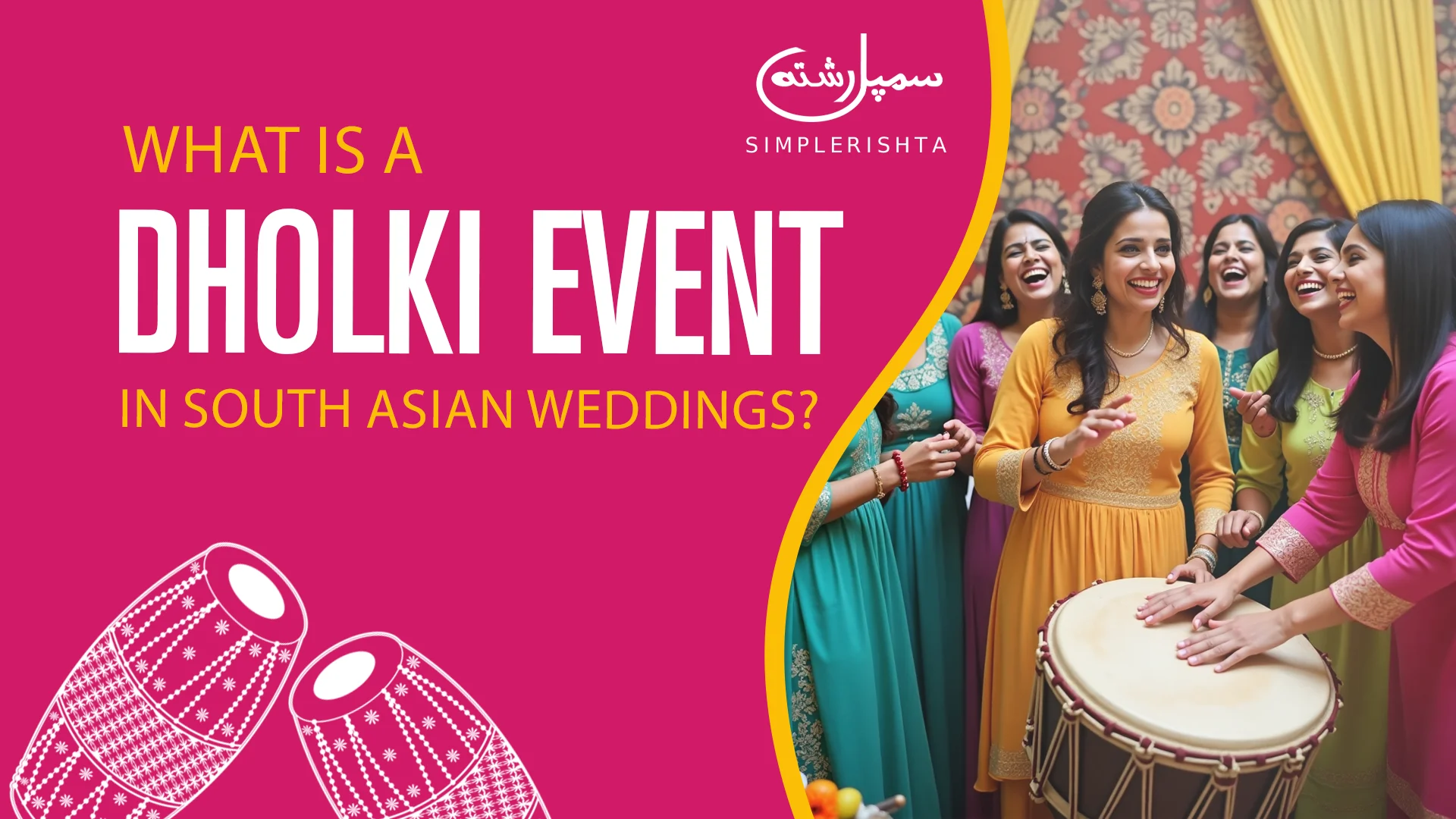
South Asian weddings are known for their vibrant colors, meaningful rituals, music, food, and emotional warmth. Long before the nikah and the rukhsati, the celebrations begin at home with a Dholki, one of the most loved pre-wedding events in Pakistani and Indian culture.
A Dholki sits alongside other pre-wedding functions such as Mayun and Mehndi, but it has a character all its own. It is the informal music night, named after the small two-headed drum that sets its rhythm, where the bride, her family, and close friends gather to sing, clap, and dance in the weeks and days leading up to the wedding. It is popular across Pakistan, India, and Bangladesh, and is also celebrated by some communities in Nepal and Sri Lanka.
So what exactly is a Dholki event, who hosts it, how does it differ from the Mehndi, and what should the bride and guests wear? This guide walks through the meaning, the rituals, the songs, and the modern trends that keep this tradition alive today.
What is a Dholki Ceremony?
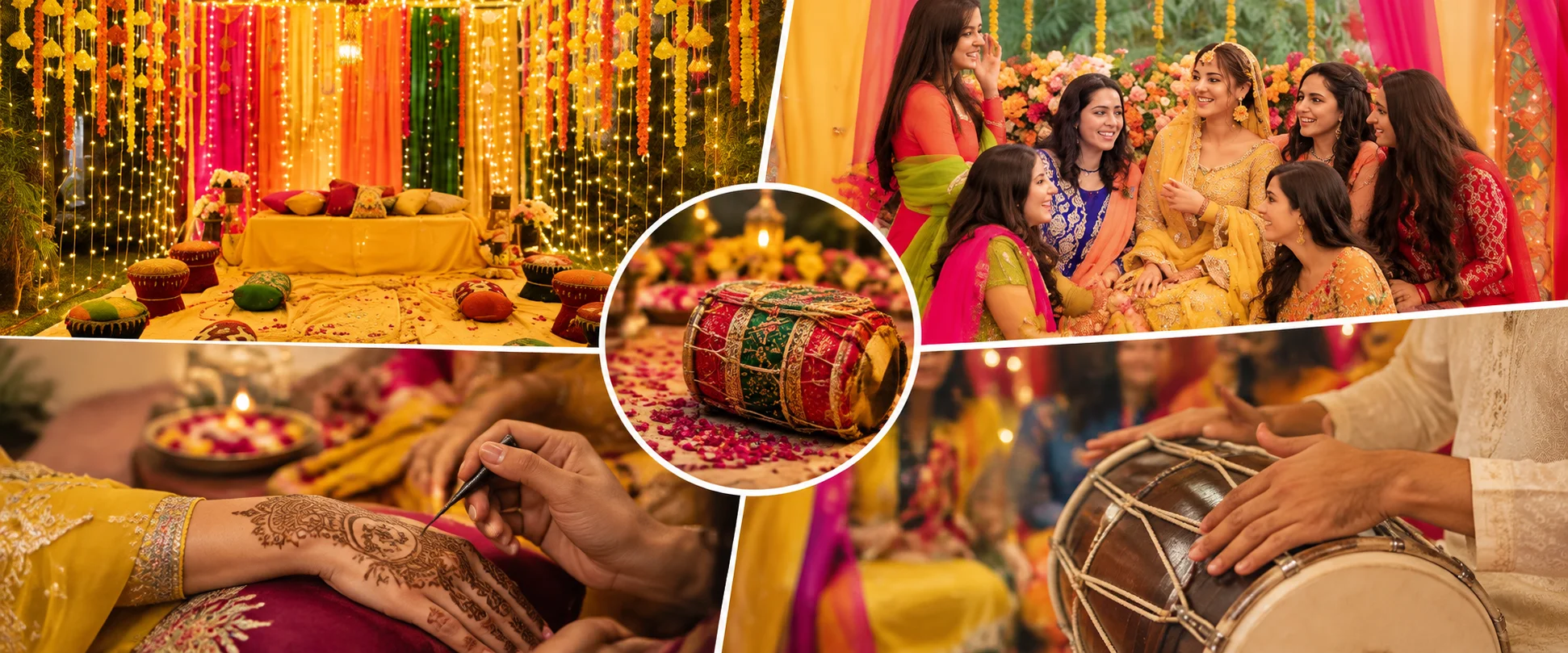
The word “Dholki” comes from “dhol,” a type of drum central to the celebration. A dholki is a small hand-played drum. Women who knew how to play it were highly valued, as it takes skill to produce the right rhythm.
In the past, Dholki was a simple, home-based celebration where family and friends gathered to sing, practice wedding dances, and enjoy festivities. In villages, the Dholki often started weeks before the wedding, mainly as a girls’ event. The bride’s friends and cousins would come together after dinner, singing traditional songs late into the night.
Back then, people didn’t focus much on planning the music, laughter, and fun. But today, with everything becoming more commercialized and social media capturing every moment, planning plays a bigger role. Many families hire a wedding planner to manage details like food, décor, and lighting, especially when long-distance guests arrive on days before the wedding.
Home-based vendors also add more color and fantasy to the celebrations. They create themed setups, decorate the Dholki, design personalized cakes, and arrange elegant flowers, making the event even more special.
What is the Dholki function in a Pakistani Wedding?
Pakistani weddings share many similarities with Indian weddings because, before Partition, both regions followed the same cultural traditions. Look at wedding traditions across different cultures, and you’ll notice that, although some customs have no roots in Islam, families still celebrate them, blending cultural heritage with modern influences.
In Islam, Dholki events have no religious significance. Music is generally discouraged, though people could sing with a simple drum, like the duff, during happy occasions in the time of Prophet Muhammad (PBUH). Today, families make wedding celebrations more elaborate, with music, singing, and dancing playing a central role in pre-wedding events.
What Happens on a Dholki Night?
The Dholki event is a well-known tradition in South Asia, especially in Pakistan and India. Yet, some people still think it is only for girls. Historically, the sangeet ceremony in Indian weddings was a women-only event, organized by the families to celebrate the bride before the main wedding.
After Partition, this tradition evolved into the pre-wedding music night in Pakistani weddings. Traditionally, women lead the celebration, singing, dancing, and playing the drum. However, in some communities, men also join in for the music and festive fun.
During a Dholki night, the bride’s family and friends gather to celebrate with music, singing, and dancing. The dholak, a small drum, takes center stage and sets lively rhythms. Women sing traditional songs, often playfully teasing the bride and groom, and dance in circles to the beat. The event is filled with laughter, excitement, and family bonding, creating joyful memories before the wedding day.
Here’s a breakdown of what typically happens during this lively event:
1. Opening Ceremony
The evening begins with an opening prayer from a family member for the bride and groom’s happy life and thanking everyone for coming and celebrating together. This sets the tone for the event, creating a warm and welcoming atmosphere.
2. Music and Singing
Music is the heart of the Dholki night. Women take turns playing the Dholki drum, creating a lively rhythm for the celebration. They also use a spoon to tap on the drum, and if a Dholki is not available, they use a flat steel pot (parat) instead. Women sing traditional songs, which are usually fun and full of humor. Some songs playfully tease the bride and groom, while others bring back happy memories for everyone.
3. Kikli and Gidda
Besides singing, dancing is another key part of the Dholki event. Women dance to the beat of the Dholki, moving in circles or following the rhythm of the songs. Kikli and Gidda are examples of such dances.
4. Teasing and Fun
A Dholki event is also known for its playful teasing. The songs often include light-hearted jabs at the bride and groom, teasing them about their upcoming marriage in a fun and cheerful way.
Guests often tease the bride, and sometimes even the groom, through songs or short performances. This playful atmosphere brings a lot of excitement to the event and creates a joyful, relaxed vibe for everyone involved. It’s time to laugh, bond, and celebrate the happiness of the couple in a light-hearted manner.
5. Traditional Food and Drinks
Like any wedding celebration in Pakistan, food plays a key role in the Dholki. Hosts serve traditional delicacies and snacks, including samosas, pakoras, chana chaat, kebabs, and sweets like gulab jamun and jalebi. They also offer refreshments such as lassi, tea, and fruit drinks to keep guests hydrated and energized for the festivities.
In villages, people serve specific snacks during Dholki and Mayun, including makhaney, boiled wheat (ghungniyan), batasey, and puffed rice.
6. Gifts and Prayers
As the Dholki continues, the bride’s family often gives small gifts to the women in attendance, such as jewelry, bangles, gajrey, sweets, or other mementos to remember the event. There is also a time for prayers, where the bride’s family prays for her happiness, health, and a prosperous marriage. This spiritual moment adds depth and meaning to the event.
Modern Trends in Dholki Celebrations
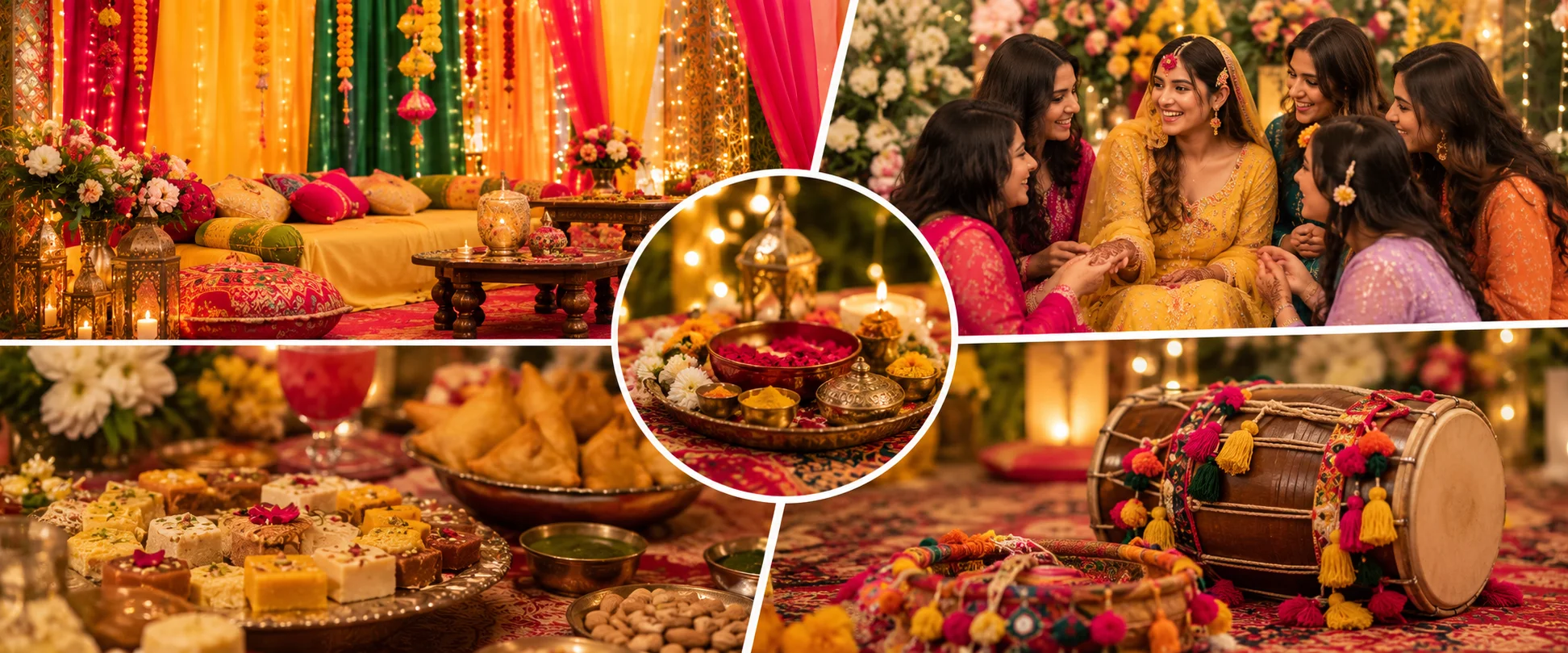
While the essence of Dholki remains the same, modern weddings have introduced new trends to the celebration. Some of these include:
1. Themed Decorations
Today, many families decorate the venue with colorful backdrops, fairy lights, and floral arrangements. Some popular themes include:
- Traditional Mughal Theme – Inspired by royal aesthetics, with rich colors and elegant decor.
- Bohemian Theme – Featuring rustic elements, fairy lights, and floral setups.
- Bollywood Theme – Focused on vibrant Bollywood-style decorations and dance performances.
2. Personalized Touches
Many families now hire home-based vendors to add creative elements to the event, such as:
- Customized Dholkis – Painted or decorated drums matching the theme.
- Personalized Cakes – Featuring wedding-related designs and messages.
- Flower Arrangements – Adding elegance to the setup.
3. Professional Singers and DJs
Instead of casual singing, some families invite professional singers or DJs to enhance the entertainment. This makes the Dholki night feel like a grand event rather than just a small gathering.
Popular Dholki Songs and Geet
The songs, known as geet, are the soul of a Dholki. Traditionally, women sang them in categories that each carried a purpose. Suhaag were the gentle opening songs, often prayers for the couple and tender verses about a daughter leaving her parents home.
Sithniyan and boliyan were the playful, witty verses, made up on the spot to tease the groom and his family and to break the ice between the two sides. Mahiye and tappay added fast, joyful rhythms that pulled everyone onto their feet.
For decades, Punjabi wedding songs were passed down within families, and singers such as Mussarat Nazir helped preserve them for a wider audience through television.
Today, many families blend these classic geet with Bollywood hits and Punjabi dance numbers so that every generation, from grandparents to cousins, can join in.
Whether the playlist is old or new, the goal is the same: shared laughter, family bonding, and a warm welcome for the couple. You can see how these customs sit within broader Pakistani wedding customs and traditions.
Who Hosts a Dholki and Who Is Invited?
Traditionally, the brides family hosts the Dholki at home, and it is a women-centered gathering of mothers, aunts, sisters, cousins, and close friends. The groom’s family often holds their own Dholki separately.
Because the event began as an intimate, home-based celebration, neighbours and extended relatives could simply drop in after dinner to sing and play the drum.
Today the guest list and the setting have both grown. Many families hold coed Dholkis where men join the singing and dancing, and some move the event from the living room to a marquee, hall, or restaurant.
Even so, the heart of the invitation stays the same: the people closest to the bride and groom, gathered to celebrate together. Like many wedding traditions from other cultures, the Dholki is really about bringing family and community into the celebration.
Dholki vs Mehndi: What Is the Difference?
People often use the words Dholki and Mehndi together, but they are not the same event. A Dholki is the informal music night, or a series of nights, held in the run-up to the wedding. It centers on singing, the dholak drum, and dancing, usually at home, with little formal planning.
The Mehndi, on the other hand, is a formal pre-wedding function, often on a fixed date close to the wedding. It centers on applying henna to the bride, a decorated stage, coordinated outfits in yellow and green, and a larger guest list.
In simple terms, the Dholki builds the excitement in the days before, while the Mehndi is the polished event that celebrates it. Many families enjoy both, and the songs practiced at the Dholki are often performed again on the Mehndi night.
What to Wear to a Dholki?
When we talk about marriage and its events, questions often arise about what to wear on a Dholki night as a bride or guest, or what a Dholki celebration outfit should look like.
Choosing the right attire is key to looking great at the pre-wedding gathering. Lehengas with flowing skirts give a graceful vibe, while an elegant Anarkali suit offers timeless charm. It’s important to pick a style that suits your body type and makes you feel confident and comfortable.
In the past, the Dholki ceremony was a smaller, family-centered event, so women from the neighborhood didn’t typically wear special dresses for it.
Since it often took place days before the wedding, there wasn’t enough time to prepare elaborate outfits. However, nowadays, the bride, her family, and close friends tend to wear new, stylish dresses to mark the festive occasion.
When picking your pre-wedding celebration outfit, go for bright, cheerful colors like rich reds, deep blues, and gold. Choose comfortable, breathable fabrics so you can enjoy singing, dancing, and the festivities without any hassle.
Wrapping Up
Now that you know what a Dholki is, you can plan it your way, from a small gathering with close family to a larger, themed celebration with singers and decor. Whatever the scale, the spirit stays the same: music, laughter, geet, and the joy of families coming together before the wedding.
At its core, the Dholki is less about how much you spend and more about the memories you make. It carries cultural heritage from one generation to the next, and it remains one of the warmest, most joyful parts of any South Asian wedding.
Frequently Asked Questions
What is a dholki night?
A dholki night is a pre-wedding celebration in South Asian weddings where family and friends gather to sing traditional songs, play the dholki drum, and celebrate the upcoming marriage in a joyful and informal setting.
What is a dholki used for in Pakistani weddings?
In Pakistani weddings, the dholki is used to create a festive atmosphere before the wedding. It brings families together through music, clapping, and traditional songs while celebrating the bride or groom.
What is the purpose of a dholki?
The purpose of the dholki is to strengthen family bonds, express happiness, ease wedding stress, and preserve cultural traditions through music and shared celebrations.
What is the difference between a Dholki and a Mehndi?
A Dholki is the informal music night held in the run-up to the wedding, centered on singing and the dholak drum, usually at home. A Mehndi is the formal pre-wedding function, often on a set date, centered on applying henna, a decorated stage, and coordinated outfits. Many families hold both.
How many days before the wedding is the Dholki held?
There is no fixed rule. Traditionally, Dholki gatherings could begin a week or more before the wedding and repeat over several nights. Today many families hold a single Dholki a few days before the main events, depending on their schedule and guests.
What are some popular Dholki songs?
Popular Dholki songs, or geet, include traditional suhaag and playful sithniyan and boliyan that tease the couple, along with mahiye and tappay for faster rhythms. Many families now mix these classic Punjabi wedding songs with Bollywood and Punjabi dance numbers.
Is dholki for girls only?
Traditionally, dholki events were led by women, but today they are enjoyed by both men and women, depending on family customs and comfort levels.
Is dholki allowed in islam?
Dholki is a cultural tradition, not a religious ritual or a formal part of Islamic wedding traditions and customs. Many families consider it permissible when it remains modest, respectful, and free from inappropriate behavior, while others choose to avoid music based on personal religious beliefs.